Software & Comparisons
Paper vs. Digital Records: Which Is Safer for Tattoo Studios?
Explore why digital records are safer and more efficient than paper for tattoo studios, enhancing security, compliance, and workflow.
Digital records are safer, faster, and more reliable fortattoo studioscompared to paper records. Here’s why:
-
Paper records are prone to damage (fire, flood), theft, and loss. They take up space, are time-consuming to manage, and are harder to secure.
-
Digital records offer encryption, access controls, and automatic backups to protect data. They simplify operations, reduce errors, and make compliance with legal requirements easier.
Key Advantages of Digital Records:
-
Security: Encryption, multi-factor authentication, and cloud backups reduce risks.
-
Efficiency: Quick data retrieval, automated forms, and better organization save time.
-
Compliance: Audit trails and automated reporting meet regulatory standards.
Quick Comparison:
| Feature | Paper Records | Digital Records |
|---|---|---|
| Security | High risk of physical loss or theft | Encryption, access controls, backups |
| Efficiency | Time-consuming, prone to errors | Instant access, automated processes |
| Compliance | Manual tracking, error-prone | Automated reporting, audit trails |
| Cost | Printing, storage expenses | Minimal physical costs |
Switching to digital records, supported by tools like Tattoo Studio Pro, gives you better security, faster processes, and easier compliance for tattoo studios.
Paper Records: Problems with Safety, Work Speed, and Rules
Many tattoo shops keep using old paper ways, but this choice leads to big problems. From safety risks to slow work and rule issues, paper does not do well in a modern shop. Let’s look at the main trouble with safety, work speed, and rules.
Safety Issues with Paper Records
Paper records are more at risk than you might think, even more so than digital ones. First, they can be easily ruined by fire, flood, or other big mishaps, losing years of info in a snap. Digital files can be saved in many places, but paper files are only there once, making them lost for good if gone.
Theft is a big worry too. If paper files are not locked up, anyone can get to them, be it during a theft at night or during day-to-day work when not OK [4]. Even worse, you can’t tell who has seen or used the info.
“Data is the lifeblood of any industry. Treating it as a sacred trust is not just wise, it is a responsibility.”, Eric Robuck, owner and chief executive officer, The Valander Group
Even if it’s for a short time, keeping client data on paper must follow PCI rules [5]. If things go wrong, losing clients’ trust can hit your studio’s good name hard [4].
Problems with Paper on Time and Stuff
Using paper isn’t just risky, it also takes a lot of time and effort. Writing out forms by hand takes away time that you could use to make art [6]. Over time, these forms build up, fill space and make it tough to find key info fast, more so when it’s busy [2].
What’s more, handling paper often brings mistakes, lost files, and slow work. Need to give a client a copy of their info? That means more time spent searching and extra costs for prints. Just the yearly cost of printing stuff can hit $1,200 per studio [2].
Paper and Rules Issues
For rule-following, paper ways can be hard. Tattoo places must keep good client records, like tattoo info, dates, needle and dye batches, and any health issues, to pass checks [7]. Paper makes this tough and error-prone.
Logging info for sterilization, training, and certs is tricky too. These logs are key for health and safety rules, and any mistakes or missing files could mean fines, legal issues, or even your studio shutting down [1]. With about 30% of U.S. adults having tattoos [8], the focus on rules is up, making it more important to keep up.
Digital Records: Security, Efficiency, and Compliance Benefits
Paper records often fall short in both safety and efficiency, leaving gaps that digital systems are designed to fill. Digital recordkeeping addresses these shortcomings with advanced security measures, simpler workflows, and automated compliance. Here’s how these features make digital records a smarter choice.
Security Features in Digital Records
Digital systems provide security measures that paper records simply can’t match. Encryption ensures that sensitive information is accessible only to authorized users. This is particularly important given that 81% of data breaches involve weak or stolen passwords [9].
With access controls, you can determine exactly who can view or edit specific data. Adding multi-factor authentication further strengthens security by requiring a second verification step, like a code sent to your phone, before granting access.
Automatic backups and distributed cloud storage offer resilience against data loss. Cloud storage not only encrypts data but also stores it across multiple locations, making it far more secure than traditional methods [10].
Routine security audits help identify potential risks early. Considering the average cost of a data breach hit $3.86 million in 2020 [9], these proactive measures can save businesses from significant financial and reputational damage.
Efficiency Improvements with Digital Systems
Digital systems don’t just secure client records- they change how daily operations run. Tasks that once took hours can now be completed in seconds. Quick retrieval of client information, for example, allows you to access details like preferences, past records, and contact information instantly [6].
Clients can scan a QR code to fill out digital forms that auto-populate with returning data, reducing both wait times and errors [6].
“Digital waivers are a game-changer for tattoo studios seeking to optimize their operations and enhance client experiences.”, eWaiverPro Digital Waivers
By eliminating manual tasks, artists can focus more on their work. For example, digital forms automatically pull up existing client information for returning customers, cutting down on repetitive data entry and minimizing errors caused by messy handwriting or incomplete forms.
Better organization is another major win. Documents like consent forms, aftercare instructions, and health questionnaires are automatically sorted and easy to locate. This ensures that no critical paperwork gets misplaced.
Compliance Benefits of Digital Records
Digital systems simplify compliance, reducing the legal risks often associated with paper records. Audit trails track every change made to client records, noting who accessed what information and when. This creates a clear, reliable record that’s invaluable during inspections.
Digital consent forms integrate cleanly into the system, ensuring all necessary documentation is accounted for. Staff are prompted to collect signatures and flag missing information before appointments, leaving no room for oversight.
With automatic reporting, compliance documents for health department inspections are generated effortlessly. Systems can log sterilization procedures, training records, and certifications, minimizing human error and avoiding fines or legal issues [1].
Accurate record-keeping becomes second nature. Digital systems capture essential details, like tattoo dates, needle batches, and health concerns, ensuring compliance with industry regulations and protecting against penalties [1].
Finally, regular updates keep your processes aligned with changing regulations. New forms or requirements can be pushed out instantly, eliminating the hassle of reprinting and redistributing paper documents [1].
Paper vs Digital Records: Security and Compliance Comparison
When comparing paper and digital records, the differences in security, compliance, and cost are striking. Paper records, for instance, are highly susceptible to disasters like fire, flooding, and theft, which can wipe out years of information in an instant [11]. Alarmingly, 75% of small business owners lack a disaster recovery plan, and 25% of businesses fail to reopen after a major disaster [12]. On the other hand, digital records, while not immune to risks like hacking or malware, benefit from encrypted cloud storage and automatic backups, offering a safety net that paper simply can’t match [11].
Access control is another area where digital systems shine. Paper records are notoriously difficult to monitor for unauthorized access, while digital systems come equipped with password protection and detailed audit trails [11][12].
“Employees are granted access to medical records based on their jobs. Everything they do online is traceable back to them.”, Data security expert
Digital records also log every change made, recording the user and timestamp, which is crucial during inspections or legal reviews. In contrast, paper records can be altered with no way to track who made the changes [12].
From a cost perspective, paper storage is a significant burden, costing U.S. businesses around $8 billion annually. Digital records eliminate the need for physical storage, reducing overhead while improving operational efficiency [12]. This also makes compliance with regulations, like New York’s seven-year retention rule for single-use needle confirmation forms, far easier. Digital systems can automatically archive and retrieve such documents, simplifying the process [14].
Paper records also introduce risks through improper disposal, a problem digital systems mitigate with tools like multi-factor authentication, regular updates, and built-in safeguards [11][13]. Given the prevalence of identity theft and application fraud [13], these digital protections significantly lower financial and legal risks.
“At the heart of most devices that provide protection for IT networks is an ability to log events and take actions based on those events… It provides security against lapses in perimeter and application defenses by alerting you to problems so defensive measures can be taken before any real damage is done. Without monitoring, you have little chance of discovering whether a live application is being attacked or has been compromised.”, Michael Cobb, Computer Weekly
A survey by the Ponemon Institute revealed that respondents overwhelmingly viewed paper as less secure than electronic records [15]. This perception aligns with the reality that digital systems offer multiple layers of protection, far surpassing the capabilities of paper.
Finally, while paper files restrict access to a single location, digital records provide secure access from any authorized site, improving both efficiency and compliance. This ensures that critical documentation is always available when and where it’s needed [3].

**
Best Practices for Digital Records in Tattoo Studios
Switching to digital records requires a solid security plan and reliable tools to protect client information while meeting legal standards.
Setting Up Strong Security Measures
To make the most of digital systems, it’s essential to prioritize security. Here are some key practices:
-
Use multi-factor authentication (MFA) to add an extra layer of security. This means requiring a password plus a secondary verification method, like a text code or an authentication app.
-
Implement strong password policies with passwords that are at least 12 characters long and include a mix of letters, numbers, and symbols. Ensure each staff member has their own unique login.
-
Enable automatic updates for your operating system, antivirus software, and record management tools. This helps protect against new security threats as they arise.
-
Train staff to recognize phishing attempts, manage passwords securely, and always log out after using shared systems.
-
Set up daily automatic backups to secure cloud storage and regularly test these backups to ensure data can be restored if needed.
-
Follow the principle of least privilege, granting staff access only to the information necessary for their specific roles. For example, front desk staff might only need access to scheduling tools, while artists should have access to client consent forms but not sensitive financial data.
These steps create a strong foundation for using advanced tools like Tattoo Studio Pro.
Using Tattoo Studio Pro for Records Management
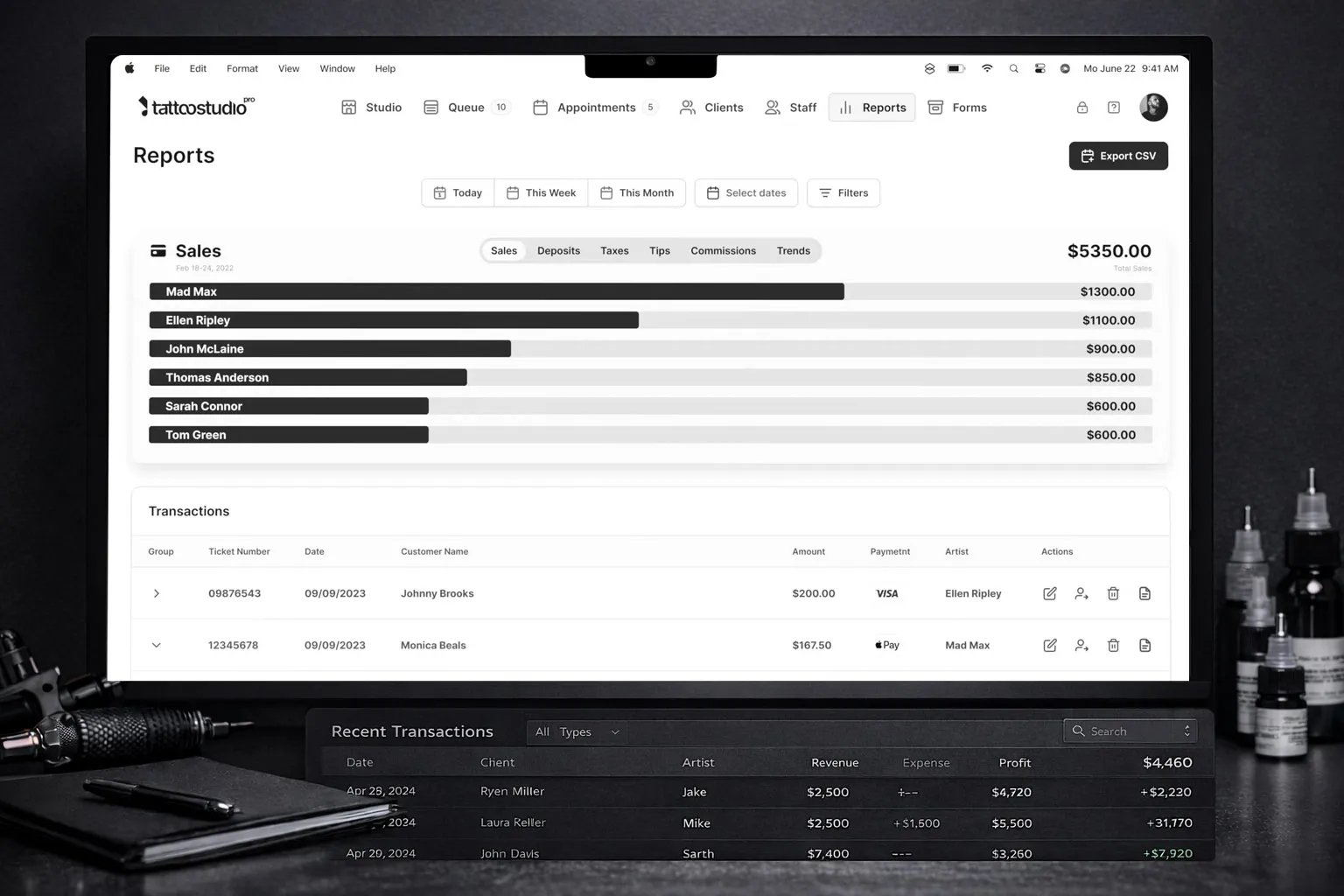
Once your security measures are in place, a platform like Tattoo Studio Pro can take your records management further, offering features designed specifically for tattoo studios.
-
Team accounts with permissions let you control who has access to what. For instance, receptionists can manage appointments, artists can view consent forms and session notes, and managers can handle financial reports while staying restricted from certain sensitive areas.
-
Digital consent forms replace paper waivers and are automatically saved to each client’s profile. These forms are easy to access during health inspections, ensuring you always have complete documentation.
-
Automated SMS reminders reduce no-shows and provide a record of client communications, which can be useful during inspections or legal reviews.
-
Integrated payment processing throughStripe creates secure financial records that sync directly with client profiles, minimizing errors from manual entry or separate payment systems.
-
Searchable PDF generation makes it simple to find and share specific records, whether it’s a client’s consent form or documentation needed for an inspection.
-
Cloud-based storage ensures records are automatically backed up and accessible from authorized devices, protecting your data from risks like theft, fire, or equipment failure.
-
Financial reporting tools allow you to keep accurate records for taxes and business analysis. Data can be exported in CSV format for easy sharing with accountants or integration with other tools.
-
GDPRcompliance features help you manage client consent, set data retention schedules, and securely delete information when necessary.
-
Customizable forms let you adapt consent and intake documents to meet the specific legal and health requirements of your state or local area.
Tattoo Studio Pro also offers system monitoring and feedback tools, allowing you to track which features are most used and identify areas for staff training. Over time, this helps you fine-tune your digital record-keeping processes based on how your studio operates day to day.
Picking the Safer Option for Your Tattoo Studio
Digital records clearly outshine paper systems in every important aspect of safeguarding your tattoo studio, client data, and daily operations. With features like encryption, access controls, and audit trails, digital solutions offer a level of security that paper simply can’t provide.
Beyond security, digital records make day-to-day tasks easier. Instead of sifting through stacks of paper, you can quickly retrieve any file, giving you more time to focus on what truly matters, your art and your clients.
Another advantage is how digital systems simplify compliance. With digital consent forms, you can ensure all client information is accurate and complete, minimizing the risks of missing signatures or other documentation errors.
To fully benefit from these systems, it’s important to follow best practices. This includes using multi-factor authentication, strong passwords, setting proper user permissions, and keeping regular backups.
By pairing these practices with specialized software like Tattoo Studio Pro, studios gain access to features such as encrypted storage, role-based access, automated backups, and compliance tools designed specifically for tattoo businesses. This combination improves security and changes how studios manage their operations.
Switching to digital records isn’t just a technological upgrade, it’s a smarter, safer way to ensure your studio’s success and protect your clients’ trust. Treat these record-keeping insights as part of our Complete Tattoo Studio Management Handbook, your go-to resource for running a secure, organized, and future-ready tattoo studio.
FAQs
Why are digital records considered safer than paper records for tattoo studios?
Why Digital Records Are Safer for Tattoo Studios Switching to digital records offers tattoo studios a much safer way to handle client information compared to paper. For starters, digital files can be encrypted and regularly backed up, which significantly lowers the chances of losing data or falling victim to theft. Unlike paper records, which can be physically altered or misplaced, digital records are far more secure and tamper-resistant, keeping client details accurate and protected.
Another big advantage is centralized storage. Digital systems allow all sensitive information to be stored in one secure location, making it easier to manage and protect. Plus, they help studios stay on top of industry regulations by ensuring compliance is built into the system. By embracing secure digital tools, tattoo studios not only protect their clients’ privacy but also make their day-to-day operations more efficient.
How do digital records help tattoo studios meet health and safety regulations?
Digital records make a real difference for tattoo studios aiming to stay on top of health and safety regulations. By securely organizing client health histories, consent forms, and sanitation logs, studios can ensure their documentation is accurate, complete, and easy to access. This minimizes the chance of mistakes or missing details that could lead to compliance headaches.
What’s more, digital systems offer the advantage of real-time updates and simplified record-keeping. This makes it much easier to prepare for inspections or audits. With all the necessary information stored in one place, studios can quickly show they meet sanitation standards and legal requirements, saving time and cutting down on unnecessary stress.
How can tattoo studios switch from paper to digital records while keeping client data secure?
To make the switch from paper to digital records smooth, tattoo studios should invest in dependable digital tools designed to securely store and manage client information. Key features to prioritize include encrypted storage, role-based access controls, and automated backups, ensuring sensitive data remains protected. Incorporating digital consent forms can also simplify your workflow while meeting legal obligations.
It’s equally important to provide your team with proper training on the new system so they can use it efficiently and securely. Make a habit of reviewing your data security practices regularly to mitigate risks and uphold the trust of your clients.