Software & Comparisons
Tattoo Machines Explained: Coil vs. Rotary vs. Pen (and What It Means for You)
Unleash creativity and efficiency with modern tattoo machines. Explore how these innovative tools are shaping the future of tattooing.
Tattoo Machines Explained: Coil vs. Rotary vs. Pen (and What It Means for You)
If you’ve ever sat in a tattoo chair and heard that distinctive buzz, you already know the sound of a tattoo machine at work. But do you know what’s actually happening inside it? And more importantly, does the type of machine your artist uses affect the tattoo you walk out with?
The short answer: yes, it can. Not in a way that should make you panic, but understanding the basics helps you ask better questions, know what to expect from the process, and feel more confident sitting down for your appointment.
This guide covers how the three main types of tattoo machines work, what each one does well, and what actually matters when you’re choosing an artist.
How a Tattoo Machine Actually Works
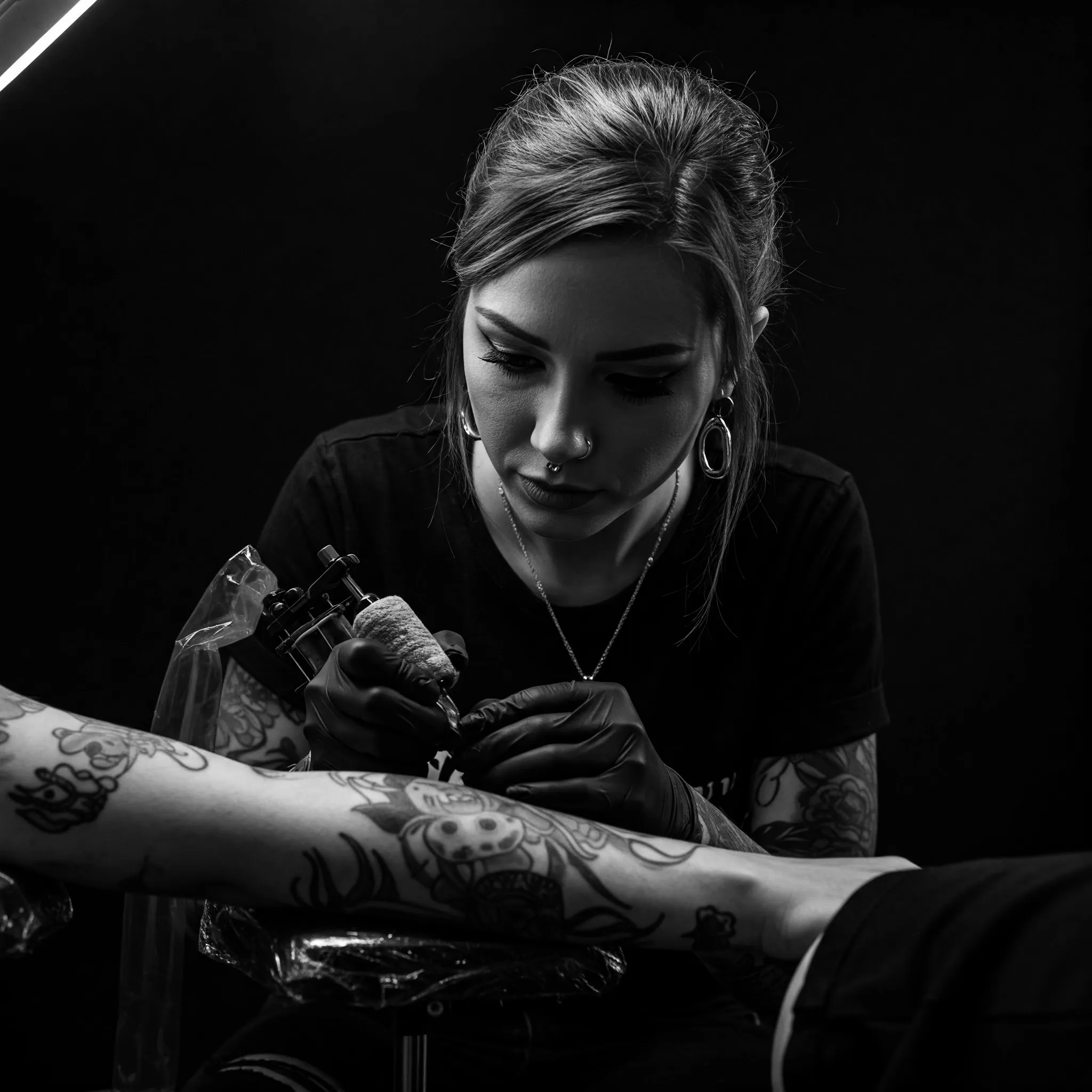
Every tattoo machine (sometimes called a tattoo gun) has the same job: move a needle (or cluster of needles) up and down at high speed to push ink into the dermis layer of your skin. The dermis sits just below the epidermis. It’s stable enough that the ink stays put for life, deep enough that a skilled artist can work with precision.
Where machines differ is in how they drive that needle movement. That mechanical difference shapes everything from the sound and vibration of the machine to how it handles different techniques.
The Three Main Types of Tattoo Machines
Coil Machines
Coil machines are the classic. When you picture a tattoo artist at work and hear that heavy buzz, that’s almost certainly a coil machine. They’ve been the industry standard since the late 19th century, when the first electric tattoo machine was adapted from a rotary engraving tool.
The mechanism uses an electromagnetic circuit. Two coils (wrapped copper wire) create a magnetic field that pulls a metal bar down, driving the needle into the skin. When the circuit breaks, the bar springs back up. This cycle repeats 50 to 150 times per second, depending on settings.
What coil machines are good at:
-
Packing bold black linework and deep color saturation
-
Heavy traditional and neo-traditional styles where crisp outlines matter
-
The tactile feedback many experienced artists prefer
The tradeoffs:
-
Louder and heavier than other machine types
-
More maintenance (springs, contact screws, capacitors all need attention)
-
The harder impact can feel more intense for clients with lower pain tolerance
Many traditional tattoo artists swear by coil machines for linework. If your artist is doing American Traditional or old-school Japanese pieces, don’t be surprised if they reach for one.
Rotary Machines
Rotary machines arrived in the 1990s as a quieter, lighter alternative. Instead of an electromagnetic circuit, they use a small DC motor. The motor’s rotation converts to the up-and-down needle motion through a simple cam mechanism.
The result is a softer, steadier stroke. Rotary machines run much quieter, vibrate less, and create less drag on the skin.
What rotary machines are good at:
-
Realism and portrait work where shading gradients need to be smooth
-
Watercolor-style tattoos and color blending
-
Clients who are nervous about the process (the quieter hum helps)
-
Longer sessions where machine vibration fatigue is a real factor
The tradeoffs:
-
Some artists find the feedback less intuitive than coil for certain linework
-
Motor-driven machines require less fine-tuning but still need regular maintenance
Rotary machines have become the default for many contemporary artists, particularly those working in illustrative and fine-line styles.
Pen-Style (Rotary Pen) Machines
Pen machines are a subcategory of rotary, but they deserve their own section because they’ve genuinely changed how a lot of studios operate. They look exactly like what the name suggests: a thick marker or stylus. The needle cartridge snaps in at the tip and swaps out in seconds.
The ergonomics are the main draw. A pen machine sits in the hand like an actual drawing instrument, which translates to better control for detailed work, less wrist fatigue over long sessions, and faster needle changes between setup types.
What pen machines are good at:
-
Fine-line, geometric, and illustrative styles
-
Long sessions where artist fatigue matters
-
Studios that prioritize sterile setup (cartridge systems are hygienic and fast)
The tradeoffs:
-
Cartridge systems cost more per session than traditional needle/bar setups
-
Some artists feel the grip diameter changes their technique
Pen machines have become the dominant choice for many fine-line specialists and single-needle artists. If you’re getting a delicate botanical piece or micro-realism work, there’s a good chance your artist is using one.
Does Machine Type Affect Pain?
Honestly, yes, but less than you’d think. Pain tolerance varies so much between individuals that machine choice is rarely the deciding factor. That said, a few things are worth knowing:
-
Coil machines have a harder, more percussive impact. Some clients notice this as sharper.
-
Rotary and pen machines have a softer stroke. Many clients describe these sessions as less intense.
-
Placement matters far more than machine type. Ribs, spine, and inner arms hurt more regardless of what machine is used.
-
Session length matters. A skilled artist using any machine type on a manageable placement for a reasonable amount of time will generally be fine.
If pain is a real concern for you, it’s worth asking your artist what machine they use and what they recommend. A good artist will be transparent about this. The American Academy of Dermatology also has guidance on what to consider before getting a tattoo, including pain management and skin care.
Machine Type and Tattoo Styles: A Quick Reference
Different machines tend to pair with different styles, though skilled artists can use any machine for most work.
| Style | Common Machine Choice | Why |
|---|---|---|
| American Traditional | Coil | Heavy line saturation, bold packing |
| Japanese Traditional | Coil or rotary | Bold lines, solid color fields |
| Realism / Portraits | Rotary or pen | Smooth gradient transitions |
| Fine-line / Illustrative | Pen | Control and precision |
| Watercolor | Rotary or pen | Soft blending |
| Blackwork / Geometric | Pen or rotary | Crisp edges, fine detail |
| New School | Coil or rotary | Color saturation and bold lines |
This isn’t a hard rule. Many artists work across styles and switch machines mid-session based on what a piece requires.
What Actually Matters More Than the Machine
Here’s the honest take: the machine is a tool. The most important variable in any tattoo is the person holding it.
A skilled artist with a basic coil machine will consistently outperform an inexperienced artist with the most expensive pen machine on the market. When you’re evaluating who to trust with permanent work on your body, focus on:
Portfolio quality in your specific style. An artist whose Instagram is full of fine-line work may struggle with a bold traditional piece, regardless of machine. Look for examples that match what you want.
Aftercare process and hygiene standards. Ask about their consent form process, setup procedure, and what aftercare they recommend. Reputable studios use digital consent forms and have a documented approach to aftercare.
Consultation. Any artist worth booking will take time to understand what you want before you sit down. A rushed or dismissive consultation is a red flag.
Their reputation for healing. A tattoo that looks good on day two but heals poorly hasn’t been done well. Ask to see healed photos in their portfolio.
The Technology Behind Modern Machines
Since the early 2000s, the biggest changes in tattoo machines haven’t been in the core mechanism but in the materials and electronics around it.
Modern machines use precision-machined aluminum frames (lighter and more balanced than the older brass bodies), better motor technology in rotary machines, and more responsive needle cartridge systems. Some higher-end pen machines now have digital speed control, letting artists dial in exact stroke rates rather than adjusting through voltage and spring tension.
None of this makes a mediocre artist great. But it does lower the barrier for precision work and reduces the physical fatigue artists experience in long sessions, which matters for quality over a multi-hour piece.
There’s ongoing development around needle cartridge design, with manufacturers experimenting with different taper lengths and needle groupings to improve performance for specific techniques. The machine you get tattooed with in 2026 is meaningfully better than what existed ten years ago, mostly in ergonomics and consistency rather than anything dramatic.
What to Ask Your Artist Before You Book
You don’t need to be an equipment expert to make a good decision. A few targeted questions will tell you a lot:
-
What style do you specialize in? Look for artists who have done a lot of work that matches what you want.
-
What machine do you use for this type of work? Not a dealbreaker either way, but it opens a conversation about technique.
-
Can I see healed photos? Fresh tattoos always look good. Healed photos show long-term quality.
-
What does your consent and aftercare process look like? Professional studios will have a clear answer.
-
How long will this take, and what do you charge? Knowing the time estimate helps you plan, and understanding pricing upfront avoids surprises.
Speaking of pricing, tattoo costs vary quite a bit depending on size, style, complexity, and the artist’s experience level. If you want a realistic sense of what your piece might cost before you walk through the door, the Tattoo Cost Calculator is a free tool that can give you a ballpark figure.

Well-run studios also use booking software to manage appointments, send reminders, and handle consent forms digitally, which makes the whole process smoother for you as a client. It’s a good sign when a studio has their operation organized.
How Tattooing Has Changed (and What Stayed the Same)
The core of tattooing has been unchanged for thousands of years: a needle, ink, and skin. The history of tattooing stretches back at least 5,000 years, with evidence found across ancient Egypt, Polynesia, Rome, and indigenous cultures worldwide.
What’s changed is the precision available to modern artists and the range of styles that precision enables. Fine-line work that required extraordinary skill a generation ago is now more accessible. Realistic portraits that once took multiple sessions of careful blending are achievable in a single day with the right equipment and artist.
The trade-off is that it’s also easier for less skilled artists to produce work that looks good in photos but doesn’t hold up. Healed photos, consultation quality, and portfolio depth still matter more than what machine is sitting on the artist’s tray.
For a broader look at where the craft is heading, the future of tattooing covers emerging techniques, ink formulations, and the direction the industry is moving.
FAQs
Does the type of tattoo machine affect how long my tattoo lasts?
Machine type doesn’t directly determine how well a tattoo ages. What matters is how deep and evenly the ink is deposited. A skilled artist with any machine type will place ink correctly. Longevity is more about artist technique, placement on the body (areas with more skin movement or sun exposure fade faster), and how well you follow aftercare instructions.
Are pen machines more sanitary than coil machines?
Pen machines use disposable needle cartridges, which makes the sterile setup faster and eliminates any possibility of needle reuse between clients. Coil machines use traditional needles that are also single-use but require more assembly. Both approaches are hygienic when done correctly. The machine type matters less than whether the studio has a clear, documented sanitation process.
Why do some tattoo artists use multiple machines in one session?
Artists often switch machines mid-session to match the technique to the work. A coil machine for laying in bold outlines, then a rotary or pen machine for blending and shading, for example. It’s not unusual to see two or three machines on an artist’s tray for a complex piece.
Will I be able to watch my artist set up the machine?
Yes. Reputable studios do their setup openly and are happy to answer questions. You should see your artist open sealed, single-use needles or cartridges, wipe down the machine, and arrange a clean tray. If anything about the setup makes you uncomfortable, it’s fine to ask about it.
Does a more expensive machine mean a better tattoo?
Not necessarily. Equipment quality matters up to a point, but professional-grade machines start at a price point that most working artists use. The difference between a $300 machine and a $900 machine won’t be visible in the work. Artist skill and experience will be.
Related Resources
Before your appointment, it helps to go in prepared. Here are a few useful reads:
-
Get a realistic cost estimate with the free Tattoo Cost Calculator
-
Understand how reputable studios handle paperwork and intake with the tattoo consent forms guide
-
Learn what to expect from the booking and appointment process from the tattoo appointment booking overview
-
Explore the broader tattoo industry trends and what’s coming next
-
See how studios use client management tools to keep records and history organized
The more prepared you are walking in, the better the experience tends to be on both sides of the needle.