Operations & Compliance
How To Get a Tattoo Apprenticeship
Learn the essential steps to secure a tattoo apprenticeship, including skill development, portfolio building, and studio selection.
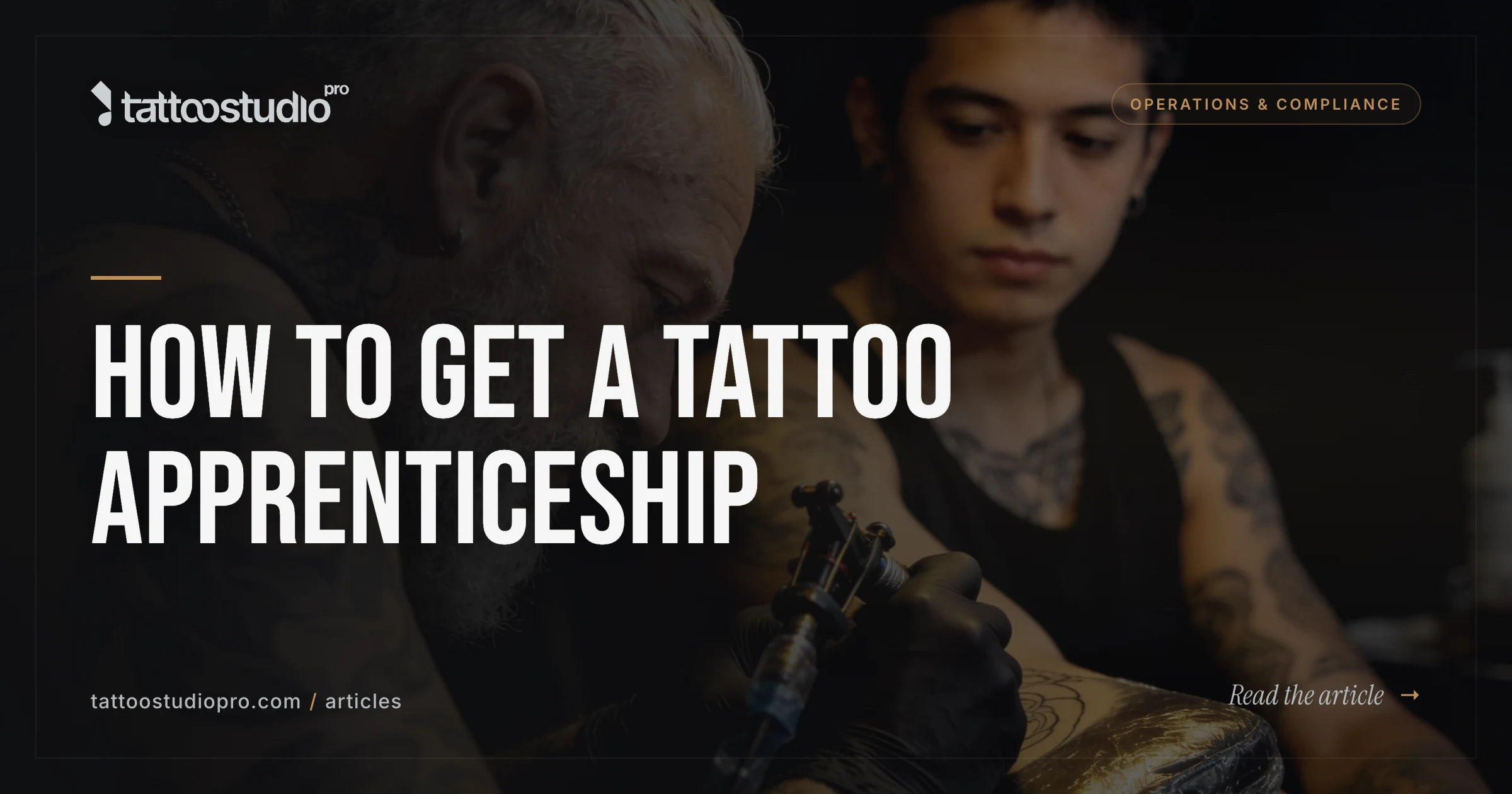
Tattoo Apprenticeship
Tattoo apprenticeships are hands-on training programs where you learn directly from experienced artists. Here’s how to get started:
Steps to Get a Tattoo Apprenticeship:
-
Build Your Art Skills: Practice drawing daily, focusing on clean lines, shading, and adapting designs to body shapes.
-
Create a Strong Portfolio: Include original, tattoo-ready designs in various styles like Traditional, Blackwork, and Realism.
-
Research Studios: Find licensed studios with skilled artists, clean environments, and good reputations.
-
Network: Attend tattoo conventions, connect with artists online, and participate in workshops.
-
Apply Professionally: Visit studios, present your portfolio, and seek feedback to improve your chances.
What to Expect:
-
Apprenticeships are typically unpaid and can last 1, 4 years.
-
Tasks include cleaning, setting up stations, managing appointments, and observing artists.
-
Professionalism, patience, and dedication are essential.
By following these steps, you’ll set a solid foundation for a career in tattooing.
Developing Basic Art Skills
Before starting a tattoo apprenticeship, it’s crucial to develop strong art skills as a foundation.
Improving Drawing Techniques
To build solid drawing skills, focus on consistent, targeted practice. One key area is line control, being able to draw clean, steady lines with varying weights and angles. Below are some effective techniques to help you refine these skills:
| Technique | Practice Method | Purpose |
|---|---|---|
| Line Work | Use weighted drawing tools | Mimics the feel of a tattoo machine |
| Tracing | Work with a lightbox | Improves precision and steadiness |
| 3D Drawing | Practice on curved surfaces | Helps adapt designs to body contours |
| Shading | Use various mediums | Develops depth and texture in designs |
Dedicate 2, 3 hours daily to practicing with professional-grade materials that simulate the weight of a tattoo machine. Work on both flat and curved surfaces to prepare for real-world tattooing challenges. Once you’ve honed these basics, expand your skill set by learning different tattoo styles.
Learning Common Tattoo Styles
To stand out in the industry, familiarize yourself with a variety of tattoo styles. This not only enhances your portfolio but also makes you more appealing to studios.
-
American Traditional: Known for bold outlines, limited color palettes, classic motifs, and strong contrasts.
-
Modern Styles: Includes New School, Neo-Traditional, Blackwork, and Realism.
According to Florida Tattoo Academy‘s 2023 program data, 85% of students who completed their full training secured apprenticeships, a significant increase from the 60% success rate the previous year (Source: Florida Tattoo Academy internal data, 2023). To develop versatility, study the work of established artists and practice replicating iconic designs. Use mediums like charcoal, colored pencils, and markers, and keep separate sketchbooks to track your progress with each style.
Building Your Art Portfolio
A well-crafted apprentice portfolio can significantly improve your chances of landing an apprenticeship.
Key Elements to Include
Your portfolio should highlight your best work and prove you’re ready for a studio environment. Focus on pieces that showcase:
| Element | Purpose | What to Include |
|---|---|---|
| Original Designs | Highlights personal style and creativity | Fully original, tattoo-ready artwork |
| Style Variety | Displays range and flexibility | A mix of color and black ink designs |
| Technical Skills | Demonstrates core techniques | Examples of shadowing, blending, and highlighting |
| Popular Styles | Reflects industry trends | Designs like tribal, watercolor, and realistic tattoos |
“Your ability to draw is the ceiling of your ability to tattoo.”, Nathan Molenaar, Tattoo Artist [1]
Dedicate a full page to each piece to ensure it stands out. High-demand designs, such as portraits, lettering, and traditional flash, should be included. Make sure every piece is polished and ready for a professional setting.
After selecting your best work, organize it into both physical and digital portfolios for maximum impact.
How to Organize Your Portfolio
The way you present your portfolio can make or break the impression you leave. Aim for a professional, clean layout in both physical and digital formats.
For your physical portfolio:
-
Use a sleek folder with protective plastic sleeves.
-
Design a cover page that reflects your artistic identity.
-
Add a short bio and artist statement.
-
Group your work by style (e.g., Traditional, Realism, Blackwork).
For your digital portfolio:
-
Build a professional website with a gallery section.
-
Use high-quality, well-lit photos of your artwork.
-
Categorize designs by style for easy browsing.
-
Include clear, up-to-date contact information.
Make sure all digital images are high-resolution and cropped neatly. When photographing your work, stick to consistent lighting and neutral backgrounds for a polished look. Keep your portfolio focused, quality always outweighs quantity.
Finding the Right Tattoo Studio
After honing your portfolio and refining your artistic skills, the next step is choosing the right studio to take your craft to the next level.
Choosing the Perfect Studio
Start by researching licensed local studios. Dive into reviews, check their social media presence, and explore artist portfolios. When assessing studios, keep these factors in mind:
| Criteria | What to Look For | What to Avoid |
|---|---|---|
| Cleanliness | Sterile, organized spaces | Cluttered areas, visible dirt |
| Artist Expertise | High-quality, consistent portfolios | Poor-quality work, no online presence |
| Studio Reputation | Positive reviews, active social media | Negative reviews, irregular updates |
| Professionalism | Displayed licenses and certifications | Missing credentials, unprofessional vibe |
| Learning Environment | Supportive, collaborative staff | Hostile or unwelcoming atmosphere |
Once you’ve shortlisted a few studios, take the time to connect with professionals to learn more about their work environment and culture.
Connecting with Industry Professionals
Networking is a crucial part of finding a tattoo apprenticeship programs. Build relationships within the tattoo community through these avenues:
-
Tattoo Conventions: Attend events to meet artists, observe their techniques, and explore different styles.
-
Art Shows: Display your work and engage with local artists.
-
Online Communities: Join tattoo-related forums and social media groups to interact with professionals.
-
Workshops: Participate in sessions that focus on techniques and skill-building.
Approach these opportunities with genuine interest and professionalism. Engaging meaningfully with artists can help you better understand their work and open doors to potential apprenticeship opportunities.
How to Approach a Studio
Many apprenticeship requests fail due to poor strategy. Use these steps to increase your chances of success:
-
Initial ContactBook a tattoo appointment with the artist you admire. This shows you’re serious about their work and lets you experience their process firsthand.
-
Building RapportVisit the studio during quieter hours to observe the environment. Dress neatly and present yourself professionally.
-
Portfolio PresentationShare your portfolio and ask for constructive feedback.
-
Follow UpApply the feedback you receive, improve your work, and return to showcase your progress. This demonstrates your dedication and willingness to learn.
What to Expect as an Apprentice
Daily Apprentice Tasks
Tattoo apprenticeships are demanding, with long hours and a variety of responsibilities. Most apprentices work six days a week, typically starting around 11:30 AM and finishing late at night. Here’s a glimpse of a typical day:
| Time | Core Responsibilities |
|---|---|
| Morning (11:30 AM) | Setting up the shop and initial cleaning |
| Early Afternoon | Greeting customers and managing appointments |
| Mid-Afternoon (2, 5 PM) | Running errands and helping artists |
| Throughout the Day | Observing and learning on the job |
| Evening (10, 11 PM) | Closing duties and final cleanup |
“An apprentice will do chores around the shop while the other artists tattoo. They work the front desk and interact with customers” [2].
Some of the main tasks include:
-
Setting up and breaking down workstations
-
Keeping track of and restocking supplies
-
Handling appointments and customer inquiries
-
Managing the shop’s online presence
-
Practicing drawing and creating designs
During the first six months, the focus is on mastering essential skills like customer service, scheduling, and preparing stations.
“The first six months is customer service, scheduling, station set up and break down. During all that I’m also giving homework and drawing assignments” [4].
As your skills improve and your portfolio grows, your apprenticeship will prepare you for a career in professional tattooing.
Studio Behavior Guidelines
Excelling as an apprentice isn’t just about the tasks, it’s also about how you conduct yourself. Professionalism and a positive attitude are key to your success.
Professional Conduct:
-
Be punctual and dependable
-
Dress appropriately for the shop
-
Take initiative and stay engaged
-
Listen carefully to feedback
-
Be patient as you learn
Building Relationships:
-
Show respect to both staff and clients
-
Accept criticism as an opportunity to grow
-
Avoid pushing for opportunities prematurely
-
Contribute to a positive shop environment
“I believe my duty as a mentor is not just to teach the technical aspects of tattooing, but how I can teach you to have a career. I really try to create an environment of growth and openness, and foster that and give that to other [artists]” [4].
Financial Challenges: Keep in mind that apprenticeships often come with financial hurdles. Many require full-time commitment without pay for up to two years [1]. To make ends meet, some apprentices take on part-time jobs during this period.
“there will be things that myself or the other artists will not be able to teach you” [3].
Helpful Tools and Resources
Training and Education Options
Online courses can be a great way to build your skills as a tattoo artist. For instance, Patch Tattoo Therapy in Los Angeles offers 37 lessons for $399, covering everything from key techniques to studio operations.
“Patch Tattoo Therapy Training is the only resource that I’ve found that is 100% comprehensive. My tattoos have improved considerably since I started Patch Tattoo Therapy Training.”, Kelley Van Dilla [5]
Here are a few training platforms to consider:
| Platform | Key Features | Cost |
|---|---|---|
| Tattooing 101 Artist Accelerator | Over 500 video modules, private mentoring | $597 or $59/month |
| Domestika | Courses led by experts like Polilla Tattoo and Sophie Mo | Starting at $0.99-$1.99 |
| Patch Tattoo Therapy | 37 detailed lessons | $399 |
Books can also be a great addition to your learning:
-
“The Ultimate Tattoo Bible” ($97): Covers everything from machine usage to safety protocols [7].
-
“Reinventing the Tattoo” by Guy Aitchison ($399): A deep dive into artistic vision and technical skills [6].
“As a newbie to the art of tattooing, I have found this manual to be the most invaluable piece of literature available on the subject. Your tattoo guide contains all of the necessary info to get started in the right and professional way! Ten out of ten for producing what I would say is the tattooists BIBLE!”, Karl “Joker” Wenzel [7]
Combining hands-on training with these resources can help you build a strong foundation in tattoo artistry.
Tattoo Studio Pro

Managing a tattoo studio effectively is another skill that can make you stand out. Tattoo Studio Pro offers tools to simplify studio operations, including:
-
Appointment scheduling with SMS reminders
-
Sales tracking and financial reporting
-
Automated workflows
Here’s a breakdown of their pricing plans:
| Plan | Monthly Cost | Annual Cost | Best For |
|---|---|---|---|
| FORMS | $39 | $299 | Basic studio needs |
| PLUS | $49 | $399 | Growing studios |
| PRO | $69 | $499 | Established businesses |
Next Steps for Your Tattoo Career
After completing your apprenticeship, building a successful tattoo career takes hard work and careful planning. The key? Consistent practice and a focus on mastering the basics.
Many apprentices commit to working 6 days a week at the shop, often arriving before opening hours to show their dedication. Daily drawing practice, both in the studio and at home, is essential for refining your style and skills.
Here’s a breakdown of what your journey might look like:
| Career Stage | Focus Areas | Time Investment |
|---|---|---|
| Early Apprenticeship | Shop operations, sanitation, drawing practice | 6 days/week, 8, 10 hours/day |
| Mid Apprenticeship | Basic techniques, client interaction | Extra 2, 3 hours of daily practice |
| Advanced (Year 3) | Line work, shading, portfolio building | Regular client work + practice |
Use these stages as a guide for shaping your daily habits and long-term goals.
Financial Planning: During your unpaid apprenticeship, you may need a part-time job to stay afloat financially. Later on, tools like Tattoo Studio Pro can help you manage the business side of things more efficiently.
Professional Growth: A strong online presence is crucial for attracting clients and expanding your skills. For a full roadmap, see our guide on how to become a tattoo artist. Start building your digital profile now. When your mentor offers feedback, treat it as a chance to grow and demonstrate your commitment.
Time management is another essential skill. Use quiet moments to study references or sketch, speeding up your development.
Your apprenticeship is just the start. Stay active in the tattoo community by attending conventions and events. Keep your portfolio updated with your best work, it will be one of your greatest assets as you move forward. Consider this article part of our Tattoo Studio Operations Guide, your reference for building a professional foundation from apprenticeship to full‑fledged studio work.
FAQs
What is a tattoo apprenticeship and why is it important?
A tattoo apprenticeship is a hands-on training program where an aspiring artist learns the craft directly from experienced professionals in a licensed tattoo studio. It’s essential because it gives you real-world experience, teaches proper technique and safety standards, and prepares you for a career in tattooing under expert guidance.
How do I increase my chances of landing a tattoo apprenticeship?
To improve your chances, build strong art skills and a diverse portfolio, research reputable studios, network with artists at events or online, and present yourself professionally when you visit studios or apply. Showing dedication, preparation, and respect for the craft goes a long way.
What can I expect during a tattoo apprenticeship?
Apprenticeships are often intensive and unpaid, lasting anywhere from 1 to 3+ years. Early on you’ll typically assist with cleaning, setup, customer interactions, and observing experienced artists, while gradually developing your drawing, hygiene, and technical skills. Professionalism, patience, and consistent practice are crucial throughout the journey.