Pricing & Revenue
How Blogs Boost Tattoo Studio Revenue (And Why Most Studios Quit Too Soon)
Most studios blog for three months, see nothing, and quit. Here's the revenue math behind why the first six months are investment, not waste, and which content types actually convert readers into booked sessions.
A tattoo studio blog is not a social media account. That distinction matters more than anything else in this guide.
An Instagram post lives for roughly 24 hours in the algorithm. By the next day, engagement has dropped off and the platform has stopped showing it to new people. Every post resets to zero.
A well-optimized blog post compounds. A single article answering “how long does a half sleeve take” can rank on Google for two to five years, sending your studio a few hundred visitors a month without any additional work. Those visitors aren’t scrolling casually. They’re actively researching before booking.
That’s the math most studios never run before they quit. They publish four posts, check traffic at eight weeks, see nothing, and stop. Here’s what the compounding actually looks like, which content drives bookings versus which just looks like content, and how to connect your blog traffic to real revenue numbers.
Social Media Has a 24-Hour Shelf Life. Your Blog Doesn’t.
The tattoo industry runs on Instagram. That’s not wrong. It’s how artists build audiences, get seen, and stay top of mind. But there’s a structural difference between social traffic and search traffic that determines what each one is actually worth.
Social traffic arrives because your post appeared in someone’s feed at the right moment. That person might be a fan, a fellow artist, or someone who just enjoys tattoo content. Their intent is unclear. The algorithm decided to show them your content, not because they were looking for you, but because you fit a pattern it recognized.
Search traffic arrives because someone typed a specific question into Google. “What should I know before getting my first tattoo?” “How much does a full back piece cost?” “Best neo-traditional tattoo artists in [city].” The person doing that search is in a different mental state. They’re researching a purchase decision. That converts at a fundamentally different rate.
This is why blogging and Instagram do different jobs for a tattoo studio. Instagram builds awareness and keeps your existing audience warm. A blog captures people at the exact moment they’re deciding whether to book, and it keeps doing that for years after you publish it.
One post answering a high-intent question is worth more than 200 posts that disappear after a day.
Which Blog Posts Actually Drive Bookings
Not all topics are equal. Studios that fill their blog with artist spotlights and flash availability announcements are doing social content in a longer format. These posts have an audience (existing followers who check the site), but they generate almost no search traffic from cold potential clients.
The posts that rank and convert follow a different pattern: they answer the questions people type into Google before they book a tattoo.
High-intent content that drives bookings:
Aftercare guides. “How to care for a new tattoo” and “tattoo healing timeline week by week” get searched thousands of times daily. A potential client who finds your aftercare guide, reads it carefully, and trusts what you wrote is already most of the way to booking with your studio. You’ve demonstrated competence before they’ve made contact.
Pricing and time breakdowns. “How long does a half sleeve take,” “how much does a black and gray forearm tattoo cost,” and similar queries come from people who have already decided they want a tattoo and are now figuring out logistics. Detailed pricing and timing content attracts serious buyers, not browsers. This is the highest-converting traffic category.
Style explanations. “What’s the difference between neo-traditional and traditional tattooing” or “best tattoo styles for covering scars” are research-phase queries. The person asking is figuring out what they want. A post that answers well and shows examples from your artists’ work in that style closes the gap between curiosity and a booking request.
First-timer guides. “What to expect at a tattoo consultation” or “how to prepare for your first full-day session” captures nervous first-timers doing their homework. These clients tend to commit once they feel informed, and they tend to come back.
Lower-converting topics (better suited as social content):
Artist spotlights, flash availability posts, and studio event recaps work as social content. They’re worth publishing, but they don’t drive cold search traffic. Build your blog on high-intent content first, then layer in the personality content around that foundation.
The Revenue Timeline Nobody Talks About
The reason studios quit blogging isn’t lack of discipline. It’s entering the work without an honest picture of what the timeline looks like.
Months 1 to 3: Near-zero organic traffic from new posts. Google is indexing content, evaluating your domain, and figuring out where to rank it relative to established competition. This window feels like nothing is happening, because almost nothing is. This is when most studios stop.
Months 4 to 6: First rankings appear, typically on pages 3 to 8 for mid-competition queries. Traffic is a trickle, maybe 50 to 150 additional monthly visitors from blog content. Still not impressive. Still easy to dismiss as not worth the effort.
Months 6 to 12: Rankings mature. Posts that did the compounding work start hitting page 1 or 2. A studio that published two solid, targeted posts per month can realistically expect 600 to 1,200 additional monthly organic visitors by month 12.
Year two and beyond: The posts from year one keep generating traffic while new posts add to the total. Multiple streams running simultaneously. A studio with 18 to 24 good posts indexed is not relying on any single piece. The whole portfolio compounds together.
The math at month 12, as a working model: 900 additional monthly visitors from blog content, 2% convert to contact form submissions (18 inquiries), 60% of those book (roughly 11 new clients), average deposit of $300 collected at booking. That’s approximately $3,300 in deposits per month from a single channel. Add the full session value of those bookings and the number grows further. This isn’t a projection or a promise; it’s the direction the math points when the process is working.
Studios that build this kind of compound asset treat the first 6 months as infrastructure spending, not marketing spend. It’s the foundation of serious revenue growth strategies that actually last.
What to Actually Write First
Start with the questions you answer in every consultation. Every tattoo artist runs through a mental FAQ with new clients. Those questions are your first six to eight posts.
A practical starting stack:
- “[Your city] tattoo pricing guide”: local keyword, high intent, less national competition
- “How long does a tattoo take to heal”: evergreen, high search volume, builds trust immediately
- “What to expect at your first tattoo consultation”: captures first-timers in research mode
- “[Style your artists specialize in] tattoo guide: what you should know”: specific to your shop’s strengths
- “How much does a [common piece you do] cost”: pricing research, buyer intent
- “Tattoo aftercare: the first two weeks”: foundational trust content, stays relevant indefinitely
These six posts cover the full pre-booking journey, from “I’m thinking about getting a tattoo” through “I’m ready to contact a studio.” A reader who finds your studio at post one and follows the content through to post six is self-qualifying in real time.
Portfolio content and artist features come after this foundation is built. They deepen trust for people already considering you, but they rarely initiate the relationship from scratch. For a tattoo artist website that actually generates bookings, the distinction between awareness content and conversion content is what separates sites that grow from sites that just exist.
Closing the Attribution Loop: From Blog Traffic to Revenue
Most studios that blog successfully know it’s working in a vague sense: bookings went up. But they can’t tell you which posts drove which clients, which means they can’t make smart decisions about where to invest next. The attribution chain breaks somewhere between “reader” and “revenue.”
The full loop has four steps, and one specific place where it usually breaks:
Step 1: Traffic source. Google Analytics shows which blog posts drive the most visitors. This part is easy.
Step 2: Reader behavior. Time on page, scroll depth, and what readers click next tells you whether the content is landing. A post with a 4-minute average read time is working. A post with a 20-second bounce isn’t.
Step 3: Conversion event. A reader who goes from a blog post to your contact form or booking link is a conversion. Set up goal tracking in Google Analytics to capture this. Without it, you’re guessing at whether content actually converts.
Step 4: Revenue connection. This is the gap. If your booking system is separate from your client records and financial reports, you cannot connect a specific new client back to the blog post that brought them in without manual detective work.
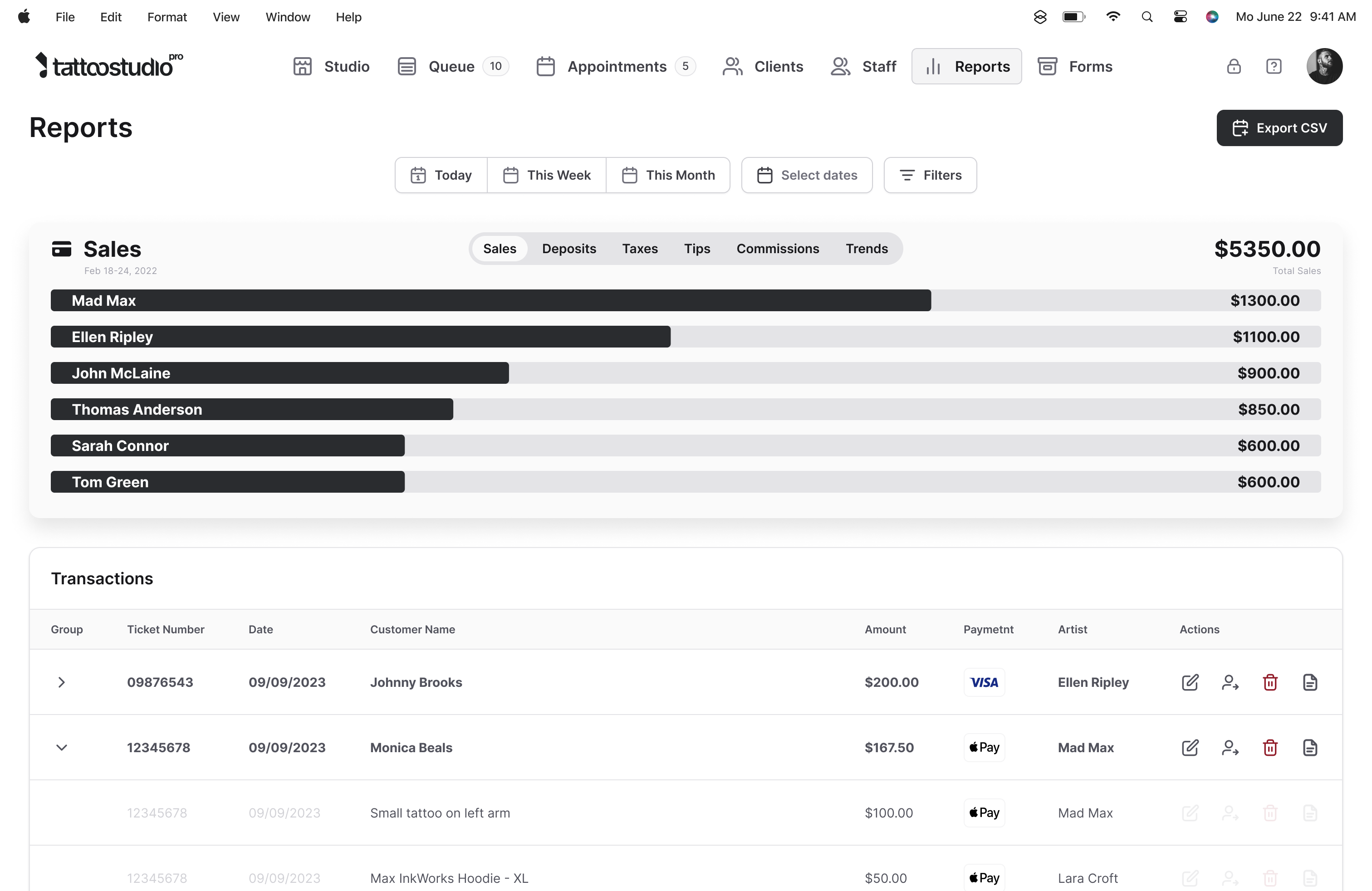
Tattoo Studio Pro closes this at the client record level. When a new client books after reading a blog post, their profile captures how they came in. Over time, the appointment history shows patterns: which months saw inquiry spikes, which services those clients booked, what their average session value was. The data is there because the client record and the booking calendar are the same system.
As Brandie Medina, Owner of Steel & Ink Studio, puts it: “Tattoo Studio Pro turned my chaotic shop into a smooth-running studio. It has everything we need in one place. I think my team loves it more than I do!”
How Often to Publish
Less than you think you need, but more consistently than most studios manage.
One well-researched post per month beats eight rushed posts. Google rewards depth and relevance over volume. A 1,400-word aftercare guide that answers every question a client might have will outperform ten 300-word posts about recent work for search purposes.
A realistic baseline:
- One to two longer posts per month (1,000 to 1,500 words on high-intent topics)
- Revisit and update older posts every 6 to 12 months
That refresh habit is underrated. A post that’s been live for a year and gets updated with current pricing examples or new style references signals to Google that it’s maintained and current. That alone can move rankings up without writing anything new.
Your year-one posts are not finished when you publish them. They’re assets that need occasional maintenance, the same way a portfolio needs updating as an artist’s work evolves.
Measuring What Actually Matters
Organic search traffic from blog posts, month-over-month. This is the core signal. If it’s growing, the strategy is working. Flat after nine months with consistent publishing means something is wrong with either the content or the technical setup.
Blog-to-contact-form conversion rate. Set up goal tracking in Google Analytics to measure how many blog readers click your contact or booking link. Informational blog content typically converts at 1 to 3% to contact actions. If you’re well below that, the content isn’t connecting the reader to a clear next step.
New client referral source. When you onboard a new client, ask how they found you. “Google / found an article” is its own category. Track it in your Tattoo Studio Pro client profiles from day one. Six months of this data is more useful than any dashboard.
Post-level traffic. Know which three to five posts drive the most organic visitors. These are your workhorses. Link to them from newer posts, update them regularly, and expand them when your services or pricing change.
The Content Marketing Institute consistently finds that organizations with a documented content strategy outperform ad-hoc publishers by a significant margin, not because they publish more, but because they’re intentional about which topics serve which stage of the buyer’s decision.
For local search specifically, BrightLocal’s annual Local Consumer Review Survey shows that 98% of consumers used the internet to find information about a local business in the past year. Your blog is the mechanism by which they find your studio specifically, rather than a generic “tattoo shops near me” result. That specificity is worth building.
Connecting Your Blog to Your Booking System
A studio blog works best when it connects to your operations rather than running alongside them as a separate project. That connection is what turns a traffic increase into a revenue increase. Consistent blogging paired with a solid booking setup is one of the most reliable paths to increasing tattoo appointment bookings without paid ads.
Practical connection points:
Every blog post needs a clear next step. A contact form link, a service page, a booking link. Don’t leave a reader at a dead end after they’ve spent four minutes with your content.
When a new client books and mentions they found a blog post, log it in their Tattoo Studio Pro client profile. A few months of this habit produces real data you can act on.
Use the reporting features in Tattoo Studio Pro to look at revenue and booking trends by period, then correlate against when you published content. The attribution won’t be perfectly clean, but patterns emerge within a few months of consistent tracking.
The key studio metrics that matter long-term include client acquisition cost and new client source breakdown. A blog post that keeps generating new clients for three years has one of the lowest acquisition costs of any channel in your marketing mix. That’s the real argument for the investment.
FAQs
Does blogging actually help a tattoo studio get more clients?
Yes, but the mechanism is specific: a blog post that answers a question people search for on Google can drive consistent traffic for years from a single publish. The challenge is that organic results take 4 to 6 months to start appearing, which is why most studios quit before seeing any payoff. Studios that stay consistent typically see measurable search traffic by month 9 to 12, with that traffic growing from there as older posts compound alongside newer ones.
What should a tattoo studio blog about?
Start with high-intent topics: local pricing guides, aftercare posts, “what to expect at your first consultation,” and style breakdown articles. These are the posts people search for when they’re actively planning a tattoo. Artist spotlights and portfolio features are secondary: they deepen trust for people already in your funnel but rarely bring in cold search traffic on their own. Build the high-intent foundation first.
How often should a tattoo studio publish blog posts?
One to two well-researched posts per month is more effective than daily thin content. A 1,200-word aftercare guide that fully answers a client’s questions will outperform ten short posts in organic search. Consistency matters more than volume. Publishing one useful post every month for a year beats a burst of twenty posts in January and nothing after.
How long does it take to see results from blogging?
Months 1 to 3 show almost nothing: Google is indexing content, not ranking it yet. Months 4 to 6 bring first rankings, usually on pages 3 to 8. By months 9 to 12, consistent publishers typically see meaningful organic traffic from blog content. Year two is where it compounds noticeably, as older posts maintain rankings while new posts add to the total. The studios that see this payoff are the ones that didn’t stop at month three.
Is blogging or social media better for a tattoo studio?
They serve different purposes and work better together than in competition. Social media builds awareness and keeps your existing audience engaged. Blogging captures people at the moment they’re actively researching and deciding whether to book. A social post lives for about 24 hours; a good blog post keeps working for years. For long-term, sustainable client acquisition, the blog compounds in a way social media structurally cannot. For reach and community, social still has the edge.
How do I know if my blog is generating bookings?
Set up goal tracking in Google Analytics to see how many blog readers click your contact form or booking link. Ask new clients how they found you and track the answer in your Tattoo Studio Pro client profiles. The reporting features let you look at revenue and booking trends by period, which you can correlate against when you published content. The attribution won’t be perfect, but the pattern becomes clear within a few months of consistent tracking. Start a free 30-day trial of Tattoo Studio Pro to see how connecting client source data to your booking calendar changes how you think about content.