Websites & Portfolios
Tattoo Shop Website vs. Instagram: Why Your Studio Needs Both
Instagram and your tattoo website are not competing for the same job. Instagram pulls strangers toward your work through visual discovery. Your website converts that attention into clients who actually show up with deposits paid. Most studios run one or the other. The ones consistently full run both, connected.
The debate is wrong. Instagram versus website is not the choice.
Instagram is a discovery engine. Your website is a conversion engine. They work opposite ends of the same client journey: Instagram surfaces your work to strangers through visual algorithms, and your website turns that attention into confirmed bookings with deposits in hand. Running only Instagram means you’re permanently dependent on a platform you don’t control. Running only a website means you’re invisible to the discovery behavior that tattoo clients actually use.
The studios with full appointment books figured this out. They stopped choosing and started connecting.
What Instagram Actually Does for Tattoo Studios
Instagram earns its place in tattoo marketing for a specific reason: clients want to see your work before they commit to something permanent. A well-maintained feed showing your range, your healed results, and your process does more trust-building than any brochure ever could. They can evaluate whether your linework holds tight over time, how your black-and-grey handles transitions, whether your color stays saturated. That kind of credibility builds itself post by post.
Beyond your existing audience, Instagram surfaces your work to people who have never heard of you. Post a Reel documenting a complex sleeve session and the algorithm may push it to thousands of people in your metro who follow similar artists. That organic reach has no equivalent on a static website.
But Instagram has real limits that matter to your bottom line, and most studios don’t add them up until they’re in trouble.
Organic reach is smaller than your follower count implies. According to Sprout Social’s annual social media benchmarks, engagement rates for business accounts typically run between 0.5% and 3% per post. If you have 8,000 followers, your average post reaches roughly 400 to 800 people. Your best content punches above that. Your routine posts land well below. That number in your bio is not 8,000 people seeing your work every time you post.
Content lifespan is measured in days, not years. A standard post has 48 to 72 hours of relevance in the feed before it gets buried. Reels can extend that window, but even strong video content plateaus within a few weeks. A properly optimized website page targeting “fine line tattoo artist [your city]” generates search traffic for three to five years without you touching it again.
You don’t own any of it. Every follower, every DM thread with a potential client, every archive of your work lives on Instagram’s servers under Instagram’s rules. Accounts get wrongly flagged and suspended. The platform went down for multi-hour stretches multiple times in recent years. Meta has restructured the algorithm repeatedly, and studios that built audiences on photo posts saw their organic reach cut significantly when the algorithm pivoted toward Reels. This is infrastructure you’re renting.
Instagram is the right tool for discovery. It is the wrong infrastructure to run your entire business through.
The DM Booking Problem
Here is where most tattoo studios lose money without fully seeing it.
A potential client finds your work, decides they want something similar, and messages you. You reply. They ask about availability. You check your mental calendar and respond. They ask about your rate for that size piece. You explain your pricing. They go quiet for three days, come back, ask if Tuesday works. You say yes. They don’t show.
No deposit was collected. No automated reminder went out. Nothing tied them to that appointment beyond a chat thread you both scrolled past.
That exchange involved 12 to 18 messages over a week. At a volume of 10 serious booking conversations per week, that is 120 to 180 DMs per week just to fill your schedule, plus another 50 to 100 messages from inquiries that do not convert. A conservative estimate puts a solo artist spending 4 to 6 hours per week managing their Instagram inbox. At a $150 per hour chair rate, that is $600 to $900 of artist time per week being spent as an inbox manager instead of doing tattoos.
The no-show problem is structurally separate but connected. A client who books through a DM has zero financial commitment. Canceling or simply not showing feels consequence-free, because it is. No money is at risk, no reminder arrived, and the artist absorbs the full cost of the empty chair.
Studios that add online booking with a deposit requirement see 40 to 60% fewer no-shows. A $75 deposit on a half-day session changes the psychology of the booking in a way a confirmed DM never does. It makes the appointment real.
What Your Website Actually Does
A properly built tattoo studio website does three things that Instagram cannot replicate.
It ranks on Google for local search. When someone searches “black and grey tattoo artist Austin” or “neo-traditional tattoo near me,” they are looking at Google results: map listings, website pages, local directories. Instagram profiles rarely appear in these searches. This is the highest-intent traffic available: someone who has already decided they want a tattoo, knows the style they want, and is actively looking for an artist in their city. A page targeting that search is open for business 24 hours a day, 365 days a year, with no posting schedule required.
BrightLocal’s Local Consumer Review Survey consistently finds that the large majority of consumers search online for local businesses before visiting or contacting them. For tattoo studios, local search visitors convert at higher rates than social discovery because they already have intent when they land on your page.
It completes the credibility check. A potential client who found you on Instagram still needs to confirm you’re the right artist before committing to something on their body permanently. Your website does that: a portfolio organized by style rather than chronological feed, clear pricing context, artist bios, your booking process, healed work galleries, studio policies. Instagram builds interest. Your website closes it.
It handles booking without your involvement. An online booking form with deposit capture works while you’re tattooing, sleeping, or between sessions. A client at 11pm on a Sunday can lock in a session for next month, complete the intake form, pay the deposit, and receive an automated confirmation, all without you answering a single message. For a solo artist doing five sessions per week, that automation recovers the 4 to 6 hours per week otherwise spent in inbox management.
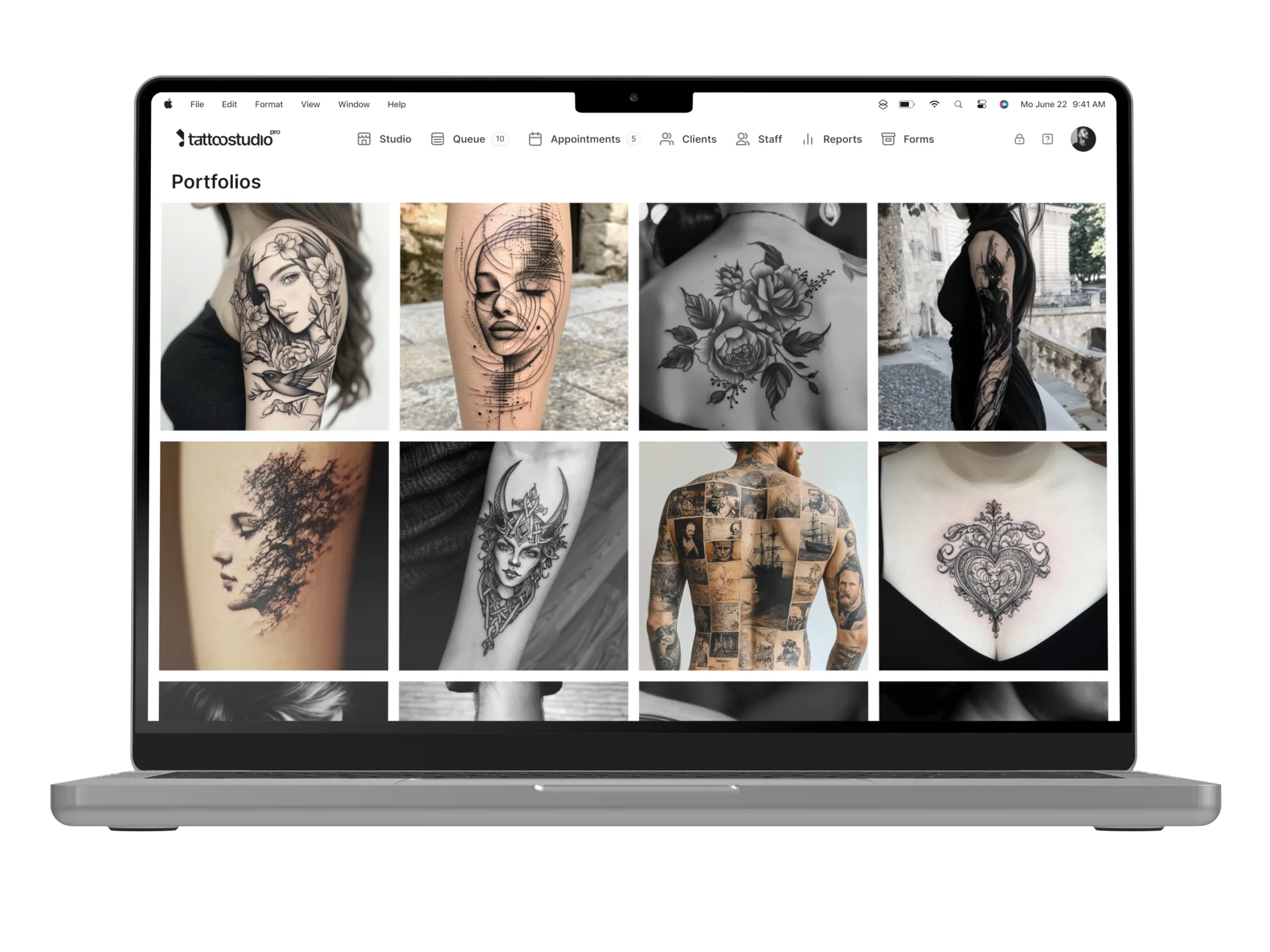
The Websites & Portfolios hub covers the full range of options from free portfolio pages to complete multi-artist studio sites if you are still deciding what type of web presence fits your setup.
The Algorithm Risk Is Real
In 2022, Meta shifted Instagram’s algorithm significantly toward Reels and short-form video. Studios that had spent years building audiences based on photo portfolios saw their organic reach drop materially within months. Further algorithm changes followed. The platform restructured again in 2024 to prioritize certain Reel formats. Each change reshapes who sees your work, when they see it, and on what terms.
This is not a theoretical risk. It has happened, repeatedly, with no warning.
A website is structurally immune to this. You own the URL. You own the content. If Google updates its algorithm, your page might shift from position 4 to position 7 and you can work on your tattoo website SEO to recover it. But your content does not disappear, your client contact information is not locked behind a platform’s login, and no one can restrict your account’s reach because they decided to favor a different content format that month.
If you are building a studio you intend to run for 10 years, concentrating all your marketing equity in infrastructure you do not control is a genuine business risk. The website is not a backup plan. It is the foundation.
The Three-Stage Client Funnel
The reason studios need both platforms is that the client journey has three stages, and each platform handles one of them well.
Stage 1: Discovery. A potential client sees your Reel on the explore page, gets your work surfaced by the algorithm, or finds your account through a hashtag. They start following. Over weeks or months they save posts of styles they like and form an opinion about whether they would trust you with a piece. Instagram handles this stage well. No other platform matches its visual discovery for creative work.
Stage 2: Research. Something shifts the follower from passive interest to active buying mode: they got a bonus, they finally found the reference piece they wanted, they decided this is the year. Now they want to verify you are the right artist. They search your name. They look at your website. They check your portfolio organized by the style they want, read your pricing context, and evaluate your booking process. This is where Instagram fails: it cannot rank locally and a reverse-chronological feed is a poor way to evaluate range across styles.
Stage 3: Conversion. The client is ready to book. If the path forward is “send a DM,” many of them do not follow through. If there is a clear booking form with available times, a deposit step, and an automated confirmation, they book right then while the motivation is high. The deposit locks in the commitment. The automated reminder 48 hours out keeps it.
Instagram handles Stage 1. Your website handles Stage 2. Your booking system handles Stage 3. Build all three and each one feeds the next without you managing the handoff.
Connecting Instagram to Your Website
The integration is simpler than most studios make it.
Your bio link should go to your booking page, not your homepage. Send Instagram traffic directly to where action happens. A visitor who clicked your bio link is already interested. A booking page or “work with me” page with clear next steps converts better than a generic homepage that requires additional navigation.
Use link stickers in Stories whenever you have availability. Opening in your schedule? Story with a link sticker to your booking calendar. New healed work from a recent session? Reel that ends with “booking link in bio.” Every piece of content can point somewhere with a next step.
Show your Instagram feed on your website. Embedding your recent posts on your portfolio page keeps your website visually current without a separate update every time you post. Clients who found you via Google see your fresh work alongside your organized portfolio without navigating away.
Build an email list from your website. Instagram followers are the platform’s asset. An email subscriber is yours. A simple waitlist or “new availability alert” opt-in on your booking page builds a list you can reach directly when a slot opens, regardless of what the algorithm is doing that week.
Where Tattoo Studio Pro Fits In
The booking link in your Instagram bio needs to go somewhere that actually closes the deal. Tattoo Studio Pro’s booking system handles the conversion end of this funnel: the client picks available times, completes intake details, pays the deposit, and gets an automated confirmation. You do not touch it until the appointment appears in your queue.
The 48-hour SMS reminder goes out automatically. The deposit is logged against the session. Every intake is documented with the client’s profile attached. The back-and-forth that would have happened across 15 DMs happens through a structured booking form instead, in a way that captures what you actually need before the appointment.
Tattoo Studio Pro starts at $29 per month and includes a 30-day free trial , cancel anytime. That is enough time to run a real test on whether automated booking and deposit capture changes your no-show rate before committing to anything.
Your social media strategy does not need to be elaborate. It just needs to point somewhere that converts.
FAQs
Do I need a website if my Instagram following is large?
Yes, and the bigger your Instagram following, the more you need one. A large audience means more people are ready to book, but Instagram has no deposit capture, no automated reminders, and no ability to rank on Google for local searches. Without a website, you are converting a small fraction of the interest you have actually earned. Your Instagram following is the audience. Your website is where they become paying clients.
What does my tattoo website need that Instagram cannot provide?
Four things that matter for bookings: a portfolio organized by style rather than reverse-chronological feed, a booking form with deposit capture, studio location and hours on pages that Google can index, and content that can rank for local searches. Instagram handles none of these well. The portfolio organization matters specifically because clients evaluating your work for their project want to browse the style they are considering, not scroll through your entire post history to find comparable examples.
How do I drive traffic from Instagram to my website?
Three moves: (1) Link your booking page directly in your bio, not your homepage. A visitor who clicked your link already has intent, so send them straight to where they can act. (2) Use link stickers in Stories every time you announce availability or share finished work. (3) End Reels with a verbal call to action directing viewers to your booking link. The clients ready to commit will click through. The ones who are not will stay engaged on Instagram until they are.
Does Instagram or my website matter more for Google rankings?
Your website, by a large margin. Instagram profiles do not rank meaningfully in local Google search results. For queries like “tattoo artist [city]” or “[style] tattoo near me,” Google surfaces website pages, Google Business Profile listings, and local directories. Instagram surfaces results to people already on Instagram, not to people searching on Google. If local visibility is important to your studio, and it should be for any permanent location, only your website provides it.
Why do DM bookings fall through at higher rates than online bookings?
Two structural reasons. First, no financial commitment at booking time: a client who books through a DM paid nothing to hold the slot, so canceling feels consequence-free because it is. Second, no automated reminder: without a system sending an SMS 48 hours before the appointment, clients forget. A booking form with a required deposit and automated SMS reminders eliminates both failure points. The deposit amount matters less than the fact that one exists. Even $50 changes how seriously a client treats the appointment.
Can I run my tattoo studio entirely through Instagram without a website?
You can, but the hidden costs accumulate fast. At 10 serious booking conversations per week with 15 messages each, you are managing 150 DMs per week on scheduling alone, plus the inquiries that do not convert. That is 4 to 6 hours per week doing work a booking form handles automatically. Add the higher no-show rate from deposit-free DM bookings and the complete absence of Google visibility, and the tradeoff is significant. The studios still running Instagram-only booking are usually early in their career, when inbox management is manageable. As the business grows, it becomes the bottleneck.
Does a tattoo studio website have to be expensive?
No. Tattoo Studio Pro offers website templates starting at $99 for solo artists and $199 for multi-artist studios, including portfolio sections and a visual editor. Hosting runs $10 per month or $100 per year. For a studio doing five sessions per week, recovering even one canceled session per month that a deposit would have prevented covers the website cost several times over.
How do I know if my website is actually helping with bookings?
Two clear signals: (1) Track how new clients found you by asking at intake. When “Google search” starts appearing alongside “Instagram,” your website is working as the research stage of your funnel. (2) Check your Google Business Profile insights for how often your site appears in local search over time. If you start booking clients who found you on Google and had never seen your Instagram, that is a client segment your studio was completely invisible to before the website existed. That audience does not shrink when the algorithm changes.
Start your 30-day free trial at Tattoo Studio Pro. Cancel anytime.