Pricing & Revenue
Tiered vs. All-Inclusive: Understanding Tattoo Software Pricing Models and Hidden Costs
Explore the differences between tiered and all-inclusive tattoo software pricing models, uncovering hidden costs and making informed choices.

When choosing tattoo studio software, you’ll encounter two pricing models: tiered pricing and all-inclusive pricing. Here’s the bottom line:
-
Tiered pricing offers different subscription levels, so you pay for only the features you need. However, critical tools may be locked behind higher-priced tiers, and hidden costs like overage fees or add-ons can drive up expenses.
-
All-inclusive pricing provides access to all features for a flat fee, simplifying budgeting. But, you might pay for tools your studio doesn’t use, especially if it’s smaller.
Key hidden costs to watch for in both models:
-
Payment processing fees: These average 2.9% per transaction and can eat into profits.
-
Add-ons: Features like SMS notifications or integrations often cost extra.
-
Support fees: Faster or premium support may require additional charges.
-
Usage limits: Exceeding limits on client records or storage can lead to unexpected upgrades.
Quick Comparison
| Feature | Tiered Pricing | All-Inclusive Pricing |
|---|---|---|
| Cost Flexibility | Pay for what you need; scalable | Fixed cost, regardless of usage |
| Budget Predictability | Costs may rise with upgrades | Consistent monthly/annual fee |
| Hidden Fees | Add-ons, overage, and transaction fees | Possible premium add-ons |
| Best For | Small or growing studios | Larger or established studios |
To choose the right model, consider your studio’s size, growth plans, and must-have features. Always review contracts for hidden fees and use free trials to assess actual costs. The goal? Find a solution that fits your studio’s needs without unexpected expenses.
Tiered Pricing Model Explained
How Tiered Pricing Works
Tiered pricing breaks down software offerings into different subscription levels, typically starting with a basic plan and scaling up to premium options. Each tier comes with its own set of features, user allowances, and corresponding costs.
For instance, a basic plan might include essentials like appointment scheduling, client management, and simple reporting. As you move up to higher tiers, you’ll often unlock extras like automated reminders, inventory tracking, advanced analytics, and priority customer support. Basic plans tend to have stricter limits on user access and storage, while premium options are much more accommodating.
Another factor to consider is payment frequency. Many software providers offer discounts for annual payments compared to monthly billing. Understanding these tiers is key to determining how well this model fits your studio’s needs and future growth.
Tiered Pricing Pros and Cons
Tiered pricing has its upsides and downsides, especially for tattoo studios navigating different stages of growth.
| Advantages | Disadvantages |
|---|---|
| Pay only for the features you need, upgrading as your studio grows | Frequent upgrades might feel necessary as your business expands |
| Lower entry costs make it accessible for new studios | Critical features could be locked behind higher-priced tiers |
| Flexibility to add users and features as needed | Monthly costs may fluctuate as your needs change |
| Try out basic features before committing to advanced plans | Add-on fees can push costs higher than expected |
This model allows you to start small and expand as your studio grows, avoiding unnecessary financial strain early on.
However, the limited features in lower-tier plans can pose challenges. Important tools, like automated commission tracking or digital consent forms, might only be available in higher tiers, potentially forcing upgrades that significantly increase your monthly expenses. Beyond these considerations, it’s also worth factoring in any hidden costs that could affect your budget.
Hidden Costs in Tiered Pricing
Tiered pricing often comes with extra charges that can add up quickly, impacting your studio’s bottom line.
One common source of additional costs is feature add-ons. Even if your current plan covers the basics, you may need to pay extra for tools like SMS notifications, advanced inventory tracking, or custom reporting. These add-ons can easily bump up your total expenses beyond the advertised price.
Overage fees are another potential pitfall. If you exceed limits on client records, storage, or other resources, you may face extra charges for each additional unit or be required to upgrade to a higher tier.
Transaction processing fees can also vary between tiers. Lower-tier plans might come with higher credit card transaction rates, which can eat into your profits if your studio handles a large volume of payments.
Lastly, support options often differ by tier. Basic plans might only offer slower email support, while premium plans provide faster options like live chat or phone assistance. Delayed issue resolution, especially during busy periods, can disrupt your operations and lead to lost revenue.
All-Inclusive Pricing Model Explained
How All-Inclusive Pricing Works
If tiered pricing feels like a juggling act, an all-inclusive plan might be the straightforward solution you’re looking for. This model rolls everything, appointment scheduling, client management, inventory tracking, payment processing, advanced reporting, and customer support, into a single, flat monthly fee.
The beauty of this setup? You get access to the full range of studio management tools without the headache of picking and choosing between tiers. What you pay stays the same every month, regardless of which features you use or how often you use them.
For tattoo studios, an all-inclusive software plan typically offers a flat rate that grants your entire team access to all features. Pricing often varies based on your studio’s size and specific needs, and many providers sweeten the deal with discounts for annual payments. This steady, predictable cost can make budget planning a breeze.
All-Inclusive Pricing Pros and Cons
This pricing model has its perks, but it’s not without its downsides. Here’s a quick breakdown:
| Pros | Cons |
|---|---|
| Consistent monthly costs make budgeting easier | You might pay for features your studio doesn’t need or use |
| Full access to all features with no hidden fees | Higher initial costs compared to basic tiered plans |
| One bill simplifies payments and reduces surprises | Limited flexibility to tailor features to your needs |
The predictable cost structure is a major win, especially for managing cash flow during slower seasons or periods of economic uncertainty. That said, smaller studios with minimal feature requirements might feel like they’re paying for tools they’ll never touch. Before jumping in, it’s worth considering whether the all-inclusive package aligns with your studio’s specific needs and priorities.
Hidden Costs in All-Inclusive Pricing
Even with a flat fee, it’s smart to read the fine print. Double-check that critical integrations and support services are part of the package. Some all-inclusive plans may still charge extra for premium add-ons or optional services. Just like with tiered pricing, scrutinizing the contract upfront can save you from surprise costs later. Knowing exactly what’s included ensures there are no financial surprises down the road.
Hidden Costs Found in Both Pricing Models
When evaluating tiered and all-inclusive pricing models, hidden fees can often sneak up on you, impacting your studio’s finances in ways you might not expect. A 2024 Capterra study revealed that unexpected fees and onboarding challenges are among the leading causes of buyer’s remorse for U.S. businesses. In fact, over one-third of companies reported surprise fees, while more than half noted these costs had long-term financial effects. Let’s look at some of the most common hidden costs that could affect your bottom line, no matter which pricing model you choose.
Payment Processing and Transaction Fees
Every transaction comes with a cost. In the U.S. alone, banks raked in $45.3 billion last year from credit and debit card merchant fees, a staggering 78% jump in merchant charges. Typically, these fees average around 2.9% of the transaction amount, plus a small fixed fee. While they may seem minor at first glance, these charges can add up quickly, eating into your profit margins. The kicker? These fees are rarely highlighted in advertised pricing, leaving many businesses caught off guard.
Add-Ons and Feature Upgrades
Even if a pricing model claims to be comprehensive, it’s not uncommon to face extra charges for additional features. Many platforms offer optional add-ons for tools or integrations that aren’t included in the base plan. For instance, connecting your software to popular tools like QuickBooks, Mailchimp, or social media platforms often requires a “pay-to-unlock” fee. These enhancements can significantly inflate your costs over time, especially if your studio relies on multiple integrations to keep operations running smoothly.
Plan Limits and Support Fees
Usage caps are another hidden expense that can catch you off guard. Many pricing plans come with limits on things like contact lists, email sends, appointment reminders, or data storage. As your studio grows, you may find yourself forced to upgrade to a more expensive plan to accommodate your needs. On top of that, while basic customer support is typically included, premium services, such as faster response times, dedicated account managers, or phone support, often come with additional charges. Other potential costs include onboarding fees, migration services, or even charges for exporting your own data.
To sidestep these financial surprises, always request an itemized quote that breaks down every potential fee beyond the base subscription price. Ask about setup costs, transaction fees, usage limits, support tiers, and data access policies. By getting a clear picture upfront, you can set a realistic budget and ensure you’re only paying for the features your studio truly needs.
How to Choose the Right Pricing Model
Picking the right pricing model isn’t just about finding the cheapest option; it’s about aligning your choice with your business goals and avoiding unnecessary surprises down the road. The right pricing model can help you manage costs effectively while supporting your studio’s growth.
Key Factors to Consider
Several factors come into play when deciding on a pricing model:
-
Studio size and team structure: If you’re a solo artist or running a small studio, tiered pricing offers flexibility to start small and expand as needed. If you opened recently, it is worth checking whether new studios qualify for six months free before you commit to a paid plan. Larger studios with established teams might prefer all-inclusive plans that simplify budgeting by eliminating per-user costs.
-
Growth plans: If you expect to expand rapidly, adding more artists, locations, or services, be mindful of how costs will scale. Tiered pricing can get expensive as you grow, while all-inclusive models often provide more predictable expenses for expanding businesses.
-
Feature needs: Studios vary widely in their requirements. A high-volume shop managing hundreds of appointments each month might need advanced scheduling and client management tools. Smaller studios might only need basic booking and payment processing. Prioritize your “must-have” features over optional extras.
-
Budget and cash flow: Tiered pricing might seem cheaper upfront but can lead to unexpected costs as your studio grows. On the other hand, all-inclusive models require a higher initial commitment but offer more predictable costs, making budgeting easier.
-
Preference for simplicity: Some studio owners value the ease of a fixed monthly fee, while others appreciate the flexibility to customize features. Consider how much complexity you’re willing to manage.
With these factors in mind, use the checklist below to guide your decision-making process.
Decision-Making Checklist
Ask yourself these questions to narrow down your options:
-
What’s your current size, and where do you see your studio in the next 12-24 months? If you’re planning to hire more staff, open a new location, or expand your services (like adding piercing or permanent makeup), your pricing model needs to accommodate that growth.
-
What’s the total cost of ownership? Go beyond the base monthly fee. Factor in transaction costs, setup fees, training time, and potential upgrade expenses. Sometimes, a lower upfront price can end up costing more in the long run.
-
Can you try before you commit? Many providers offer free trials or demo periods. Use these to see how the pricing model works in practice. Does it feel restrictive, or does it offer the predictability you need?
-
What’s your management style? If you prefer hands-on control, tiered pricing might suit you. If you want a hassle-free approach, an all-inclusive model could be a better fit.
Tattoo Studio Pro Pricing Example
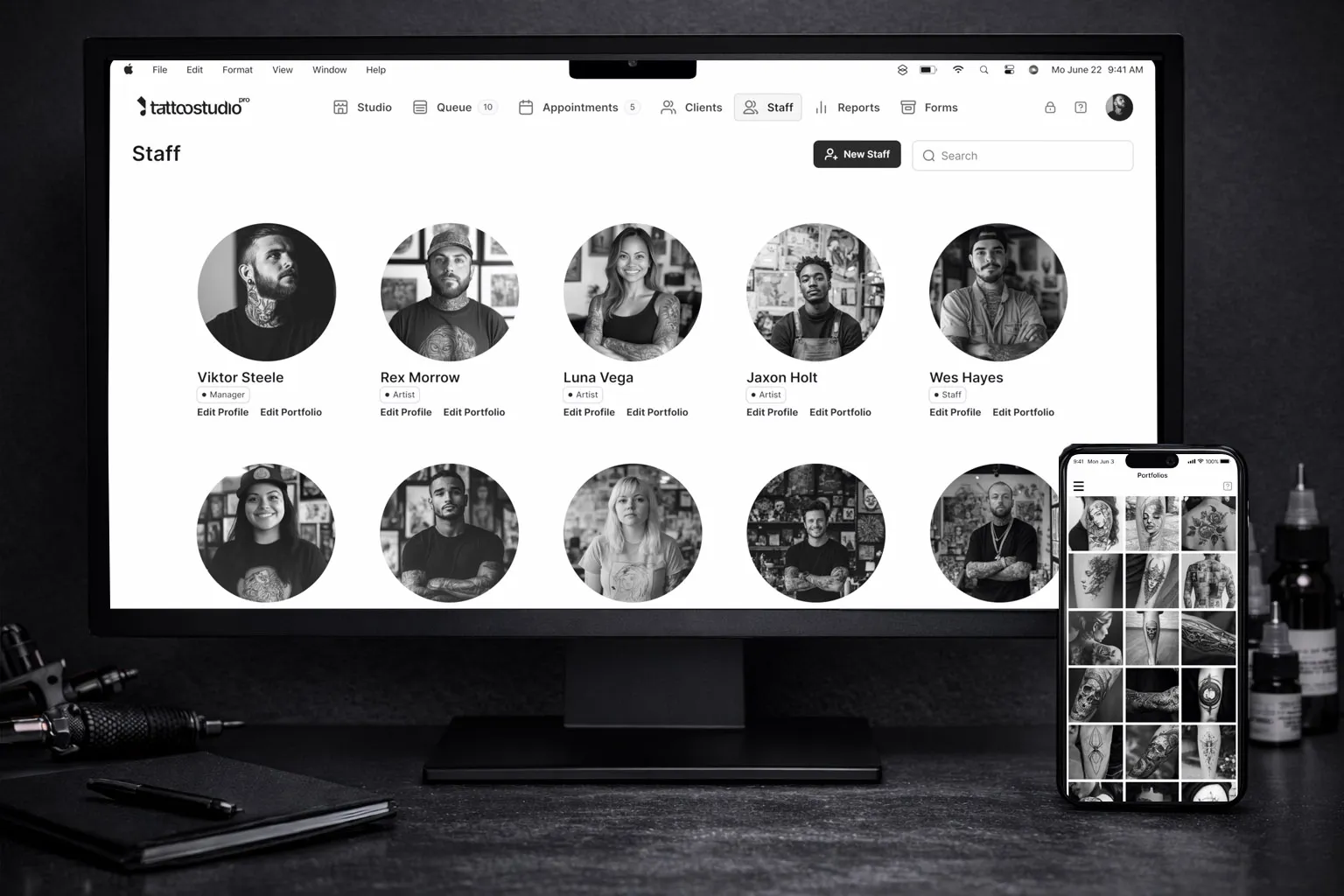
Tattoo Studio Pro’s tiered pricing structure provides a practical example of how these factors translate into real-world decisions. Their plans range from $29 per month for solo artists to custom enterprise pricing for large operations, with clear staff limits and feature sets at each level.
-
Solo artists can start with the $29/month Solo plan, which includes basics like appointment booking, client management, and basic reporting. This keeps startup costs low while leaving room to grow into the Crew plan ($69/month for up to 5 staff members) as the business expands.
-
Mid-sized studios with 10, 15 artists might find the Tribe plan ($119/month) or Clan plan ($179/month) to be the right balance of features and cost. These tiers offer advanced tools for managing busier operations without the complexity of enterprise-level pricing.
-
For studios with steady cash flow, switching to yearly billing can save money. For example, the Crew plan costs $828 annually at the monthly rate ($69 x 12) but drops to $579 with a yearly commitment, a savings of $249.
This tiered system is ideal for studios that want to start small and scale gradually. However, for studios expecting rapid growth, frequent upgrades could make an all-inclusive model more cost-effective. The key is aligning your studio’s growth timeline with the pricing structure that offers the best value. Our break-even analysis shows how quickly studios at each tier recoup their investment.
Tattoo Studio Pro’s transparent pricing, clearly defined staff limits and feature progression, makes it easier to project future costs. Unlike models with hidden fees or unexpected upgrade charges, this structure allows you to plan your budget with confidence and avoid surprises.
Making an Informed Decision
Deciding between tiered and all-inclusive pricing models is all about aligning the choice with your studio’s specific needs while keeping an eye out for hidden costs. Both options have their merits in the tattoo industry, but the right fit will depend on your studio’s size, growth plans, and how much complexity you’re willing to handle.
With tiered pricing, you get the flexibility of paying only for what you use. This can be a great option if you’re just starting out or prefer to scale expenses as your studio grows. However, as your business expands, costs can rise quickly, so you’ll need to keep a close watch on your spending. The upside? You have the freedom to decide when and how to upgrade as your needs evolve.
On the other hand, all-inclusive pricing brings simplicity and predictability. It’s particularly appealing for established studios with steady income and well-defined feature requirements. A fixed fee covers everything, making budgeting much easier and removing the hassle of tracking usage limits. The trade-off? You might end up paying for features you don’t actually need, especially if your studio is on the smaller side. These two approaches highlight the importance of managing hidden costs effectively.
The biggest factor in either model is transparency. Before signing up for any software, take the time to dig into the pricing structure. Ask detailed questions like: Are there extra transaction fees on top of the monthly subscription? What happens if you exceed user limits?
Hidden costs can sneak up on you fast. For instance, a $50 monthly plan with a 2.9% transaction fee and $0.30 per payment can add up to hundreds of dollars extra if you process $10,000 in payments. Similarly, tiered plans that seem affordable at first might require pricey upgrades once you hit user or feature caps.
To avoid surprises, take advantage of free trials and demos to see how the pricing plays out in real life. Track your usage during the trial and calculate the actual costs based on your studio’s operations. Pay attention to how easy it is to upgrade or downgrade plans, and check if the provider offers discounts for annual billing that could save you money in the long run. These insights will give you a clearer picture of the true costs involved.
Ultimately, the goal isn’t to pick the cheapest option, it’s to find the most transparent and cost-effective solution that aligns with your studio’s growth. Whether you lean toward tiered or all-inclusive pricing, choose a provider that clearly outlines all fees upfront and offers the flexibility to adapt as your business evolves.
FAQs
What hidden costs should I watch out for with tiered or all-inclusive tattoo software pricing?
Hidden costs can sneak up on you, and they often depend on the pricing model you choose. With tiered pricing, you might face extra charges for things like add-ons, advanced features, or upgrading your subscription as your needs expand. Meanwhile, all-inclusive pricing might look simple at first glance, but don’t be fooled, there could still be hidden fees, such as transaction costs or usage limits that push you toward additional payments.
The best way to steer clear of these surprises? Take the time to thoroughly review the pricing details and terms. Make sure the software fits both your studio’s budget and its long-term goals.
How do I choose the right pricing model for my tattoo studio’s size and future growth?
Choosing the right pricing model boils down to what your studio needs now and where you see it heading in the future. For smaller studios with big growth ambitions, a tiered pricing model can adapt as your team expands. Meanwhile, an all-inclusive model could be a smart choice if you prefer steady, predictable costs without worrying about surprise fees.
Think about key factors like the size of your team, the must-have features, and any hidden expenses, such as transaction fees or optional add-ons. Taking the time to weigh these considerations will help you pick a pricing structure that fits both your budget and your long-term goals.
How can I avoid hidden costs when choosing tattoo studio software?
To avoid unexpected expenses, look for software that offers a clear, all-in-one pricing structure. Take the time to review the terms thoroughly, keeping an eye out for any additional charges, like fees for extra features, transaction costs, or mandatory subscription upgrades.
Another smart move? Assess your studio’s specific requirements ahead of time. This way, you can select a plan that covers your essentials without paying for extras you don’t need. Staying proactive and asking detailed questions about pricing can help you dodge any unwelcome surprises later on.