Marketing & Growth
Creating a Memorable In-Studio Experience for Your Clients
This post provides tips and strategies for Creating a Memorable In-Studio Experience for Your Clients that will keep them returning again and again.

Creating a Memorable In-Studio Experience for Your Clients
Every tattoo session starts before the needle touches skin. It starts the moment a client walks through your door, and it doesn’t really end until they’re back home showing their friends. What happens in between is your in-studio experience, and it’s one of the most controllable factors in whether that client becomes a repeat client.
The good news: you don’t need a massive renovation budget to get this right. Most of it comes down to consistent attention to a few key areas. This guide breaks down what actually moves the needle on client experience in a tattoo studio.
Why In-Studio Experience Matters More Than You Think
Word-of-mouth drives the majority of new bookings at most established tattoo studios. When clients leave feeling cared for and impressed, they tell people. When they leave feeling like an afterthought, they tell more people.
The quality of someone’s tattoo is table stakes. Most clients assume you can do the work. What sets studios apart is the experience around the work. That’s the part clients describe to their friends, post about online, and remember when they’re ready to book again.
A well-run studio experience also reduces friction on your end. Clear communication, good intake processes, and organized sessions mean fewer reschedules, fewer complaints, and smoother days overall. For more on building efficient studio operations, see the Studio Operations chapter of the Business Management Playbook.
Atmosphere: What Clients Notice First
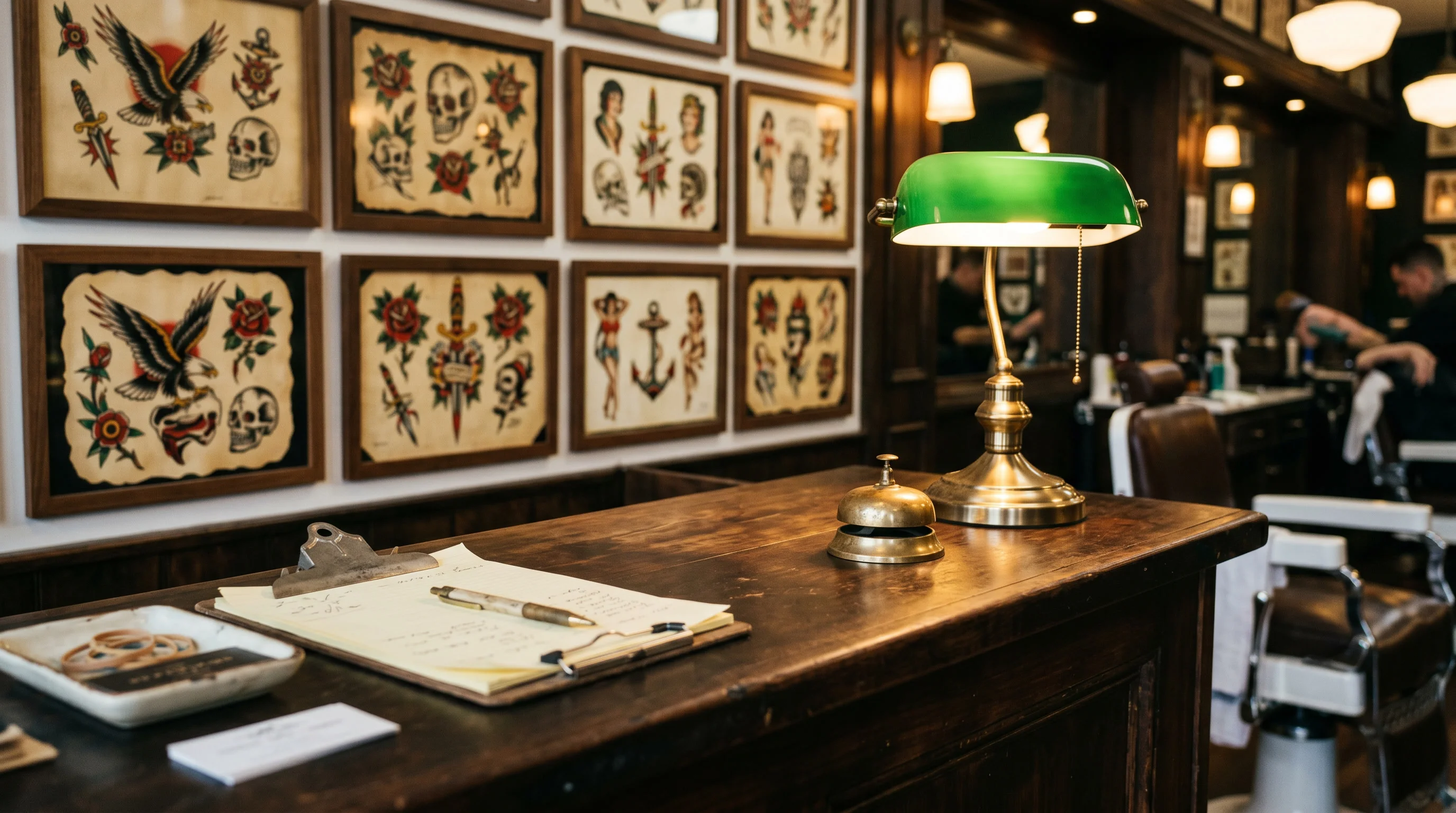
You have about 30 seconds to make a first impression when someone walks in. Clients are taking everything in: the smell, the lighting, the noise level, the vibe.
Lighting and Music
Harsh overhead lighting can feel clinical and cold. If you can, warm it up. The goal isn’t a spa, but it shouldn’t feel like a hospital either. Natural light is ideal where you can get it.
Music is a bigger deal than most studios realize. What’s playing sets the tone. The right choice depends on your brand, but the general rule is: keep it at a volume where you can have a conversation without raising your voice. Clients who want quiet can’t escape loud music. If you’re not sure, ask.
Temperature and Air Quality
Tattoo sessions can run for hours. A room that’s too warm becomes uncomfortable quickly. Good ventilation matters too. The smells associated with the process are an acquired taste, and fresh air circulation helps keep the space feeling clean.
Cleanliness as a Signal
Beyond health compliance (which is non-negotiable), visible cleanliness signals care. Spotless surfaces, organized workstations, and fresh supplies in plain sight all communicate that you take your work seriously. For context on health standards relevant to tattoo studios, the OSHA Bloodborne Pathogens Standard is the baseline every studio needs to know.
Clients notice when a studio looks cluttered or disorganized. It creates doubt, even in clients who can’t articulate why they feel uneasy.
Communication: Before, During, and After
Clear communication is the single most underrated element of a great studio experience. It’s also where most studios leave the biggest gaps.
Before the Session
Clients who arrive knowing what to expect are easier to work with and more satisfied with their experience. Send a confirmation the day before. Include what they should bring, how to prepare, and where to park if it’s not obvious. SMS reminders cut no-shows by 40-60%.
This is where studio management software earns its keep. Automated SMS reminders go out without you lifting a finger. Every client gets the same clear information, every time.
During the Session
Some clients want to talk. Some want to zone out with headphones. Read the room and follow their lead.
Active listening sounds simple, but it’s easy to get so focused on the work that you stop paying attention to the person. Check in periodically, especially during longer sessions. Ask how they’re doing with the discomfort. Offer breaks proactively instead of waiting for them to ask.
Explain what you’re doing at key moments, especially for first-timers. Not a running commentary, just the key checkpoints. “I’m going to outline first, then we’ll move to shading” goes a long way for someone who’s nervous.
After the Session
How a session ends is what clients remember most vividly. Walk them through aftercare instructions clearly and give them something written to take home. Don’t rush it.
Check in a few days later if you can. A simple “How’s it healing?” message is the kind of thing clients screenshot and share. It’s also genuinely useful, since catching a healing issue early is better for everyone.
Aftercare guidance from a reliable medical reference, like the American Academy of Dermatology’s tattoo care guidelines, gives you a solid foundation to build your own instructions from. For a ready-to-use handout you can give clients, see our tattoo aftercare guide.
Personalization: Small Things with Big Impact
Personalization doesn’t mean custom-tailoring every session from scratch. It means paying attention and acting on what you learn.
When a client mentions they have a preference for certain music, note it. When they tell you they run cold, remember it. When they’ve been in before, acknowledge it. “Good to see you again, how did the last one heal?” signals that they’re a person to you, not a booking.
Understanding your client’s goals matters too. Someone getting a memorial piece is in a different headspace than someone picking flash. Someone who is nervous about their first tattoo needs different energy than someone on their twentieth.
Personalized recommendations can also drive real value. If a client’s interested in a style you have a particular artist who specializes in, say so. If they’re asking about placement and you have a strong opinion based on experience, share it.
For tips on managing your tattoo shop staff to ensure consistency across the team, building shared standards for client interactions goes a long way.
Professionalism: The Details That Either Build or Break Trust
Punctuality
Clients plan their days around their sessions. Running late without communication erodes trust fast. If you’re behind schedule, let them know before they’re already sitting in the waiting area wondering what’s happening.
A clear appointment system, confirmed in advance, also sets expectations upfront. If your studio is regularly running late, the fix is usually in the scheduling, not just in working faster.
Quality at Every Step
The tattoo itself obviously has to be excellent. But the quality of the overall experience needs to match. High-quality supplies, a clean workspace, and a clear process all signal professionalism without you having to say a word.
Don’t cut corners on the things clients can see. They may not know the difference between one brand of ink and another, but they absolutely notice if the space looks disorganized or if the transfer paper looks like it was applied in a hurry.
Follow-Up as Standard Practice
Most studios don’t follow up. Which means studios that do stand out immediately. A quick check-in after healing builds real loyalty. It also gives you a natural opening to ask for a review, which is where BrightLocal’s research on consumer reviews consistently shows most clients form their opinions of local businesses.
How Studio Software Supports the Whole Experience
The admin side of running a studio directly affects client experience, even if clients never see it. Booking confusion, missed reminders, lost consent forms, and delayed follow-ups all create friction that clients feel.
Purpose-built tattoo studio software handles the repetitive parts so your team can focus on the in-person experience. Automated reminders go out on schedule. Digital consent forms are filled out before the client even arrives, so you spend less time on paperwork at the start of a session. Client notes stay in one place so anyone on your team can pull up context before a session.

For a closer look at how client management tools can support your operations, see the Client Acquisition chapter of the Marketing Playbook and the Operational Excellence chapter.
FAQs
What’s the most important part of creating a memorable in-studio experience?
Communication, before and after the session. Most studios focus entirely on the session itself and underinvest in what happens around it. Clear pre-session info and a thoughtful post-session follow-up do a lot of heavy lifting.
How do I make nervous or first-time clients feel more comfortable?
Explain what to expect before you start. Check in frequently during the session. Offer breaks before clients have to ask. Nervous clients relax when they feel in control and informed. Small verbal check-ins throughout go a long way.
How can I get better client reviews after sessions?
Make asking a natural part of your follow-up routine. A check-in message a few days after the session is a great time to include a review link. Clients who feel cared for are far more likely to take two minutes to leave a review.
Does studio atmosphere actually affect client satisfaction?
Yes, measurably. Lighting, music, temperature, and cleanliness all affect how clients feel about their experience, even when they can’t articulate why. A physically comfortable, clean, well-organized studio creates trust before a single word is exchanged.
How does studio management software improve the client experience?
Mostly by eliminating friction points. Automated reminders reduce no-shows and last-minute scrambles. Digital forms mean less paperwork at the start of sessions. Client notes ensure continuity, so clients don’t have to repeat their history every visit.
The Takeaway
A memorable in-studio experience isn’t built from one big gesture. It’s built from consistent execution across a lot of small things: a clean space, clear communication, personalized attention, and professional follow-through.
The studios that retain clients are the ones where people feel seen, not just served. That kind of experience travels. It shows up in reviews, in referrals, and in the rate at which clients come back.
If the admin side is eating into the time and energy you’d rather spend on those things, Tattoo Studio Pro handles the repetitive work so you can focus on the experience that actually keeps clients coming back. Try it free for 30 days.