Operations & Compliance
How Audit Trails Help Meet Legal Standards
How audit trails document consent, sterilization, and transactions to simplify inspections, reduce risks, and meet health and tax rules.
Audit trails are like your tattoo studio’s secret weapon for staying compliant with health, safety, and tax regulations. They automatically log every action, like client consent, sterilization records, and financial transactions, so you’re always prepared for inspections or audits. Here’s why they matter:
-
Keep records straight: Track who did what, when, and where with tamper-proof logs.
-
Avoid penalties: Missing client consent forms or sterilization logs? That could cost you fines or even your license.
-
Simplify audits: Quickly pull up proof of compliance for health departments or tax authorities.
-
Hold staff accountable: Ensure every action is traceable, reducing errors and risks.
Tools like Tattoo Studio Pro take it further with features like role-based access, digital forms, and real-time activity tracking. They make managing compliance easier while protecting your business, clients, and team.
How To Create An Audit Trail For Compliance?
Common Compliance Problems in Tattoo Studios
Poor recordkeeping isn’t just a paperwork issue, it can lead to significant compliance challenges that put tattoo studios at risk.
Missing or Incomplete Records
Client consent forms often fall through the cracks when recordkeeping is subpar. In New York City, studios are required to keep detailed records, including a customer’s name, address, age, and the date of their tattoo. Missing or incomplete records, especially those related to age verification, can result in serious consequences. For instance, tattooing a minor under 18 could lead to a six-month license suspension for a first offense, with repeat violations potentially resulting in permanent license revocation.
Financial records are another weak spot. Studios frequently lose receipts, misplace tapes, or fail to complete purchase orders. On top of that, sterilization logs and waste disposal documentation are often neglected, making it nearly impossible to prove adherence to health and safety protocols.
Challenges During Health and Tax Inspections
Health inspections require studios to provide documented proof of sterilization practices, waste disposal, and facility maintenance. Without these records, studios may struggle to demonstrate compliance with health and safety standards, risking violations, penalties, or even forced closures.
Tax audits also demand meticulous records. New York State mandates that businesses retain documents like canceled checks, receipts, cash register tapes, and purchase orders for at least three years after filing a return. Failure to produce these records during an audit can lead to fines and make it difficult to substantiate tax filings.
Lack of Staff Accountability
When staff actions aren’t properly tracked, it opens the door to unauthorized record changes and other compliance risks. Issues like altered client information, improper disposal of biomedical waste, or skipped sterilization steps can easily go unnoticed without a strong audit trail.
This lack of accountability has serious consequences. Poor sterilization practices, for example, can lead to infections caused by pathogens like Staphylococcus aureus or hepatitis B and C . As Tatsites.com highlights:
“Violations can result in substantial fines, sanctions, or even criminal charges. These penalties can have long-lasting effects on your business operations”.
Without a clear system to track who accesses records, disposes of sharps, or secures client consent, it becomes nearly impossible to identify training gaps or hold staff accountable. This increases the risk of future compliance failures.
A reliable audit trail makes a real difference, it ensures every action and record is documented, reducing errors and improving accountability across the board.
What Audit Trails Are and How They Work
Getting a handle on audit trails goes a long way toward tackling compliance issues and improving accountability in tattoo studios.
Audit Trail Basics
At its core, an audit trail is a chronological log that captures every transaction and user action, complete with exact dates and times.
Muhammad Raza, a technology writer at Splunk, explains it like this:
“Audit logging, or audit trails, answer a simple question: who did what, where, and when?”
In practice, this means that every action, whether it’s accessing consent forms, updating appointments, or logging sterilization processes, is automatically recorded. These systems document user actions, timestamps, and data changes without requiring any manual effort, creating a trustworthy record that’s essential for compliance.
Grasping these basics sets you up to understand the technical features that make audit trail systems so effective.
Key Features of Audit Trail Systems
Audit trail systems come equipped with several features that are designed to make compliance easier:
-
Role-based access controls: These ensure that only authorized staff can access or modify sensitive client information by assigning specific permissions.
-
Tamper-proof records: The records are built to be unchangeable, safeguarding their integrity during audits.
-
Real-time activity tracking: This feature keeps tabs on actions like account changes, data edits, and login attempts as they happen. It can also alert managers instantly to critical events.
-
Data export capabilities: Studios can quickly generate reports for inspections or audits. For instance, healthcare-related audit logs must be stored for at least six years to comply with HIPAA regulations, with some states requiring even longer retention periods. The ability to efficiently export and present this data is especially valuable during inspections.
How Audit Trails Address Compliance Issues

How Audit Trails Address Compliance Issues in Tattoo Studios
Audit trail systems help tattoo studios handle compliance challenges by recording every essential activity. These digital logs ensure studios meet their responsibilities in areas like client care, health and safety, and financial reporting. By automating these records, audit trails provide a continuous and reliable history that supports compliance efforts at every step.
Managing Client Consent and Appointment Records
Audit trails meticulously log every instance of access, editing, or sharing of client consent forms and appointment details. These logs capture who performed the action, when it happened, and what changes were made. For example, if a health inspector requests evidence that a client signed a consent form before getting a tattoo, the studio can quickly retrieve the full history. This includes when the form was created, who completed it, and whether any updates were made later. Such detailed documentation eliminates uncertainty and helps resolve disputes during inspections.
Tracking Waste Disposal and Sterilization
Audit trails go beyond client records to cover operational practices, too. Health departments often require proof of proper waste disposal and sterilization processes. These systems document every step of medical waste handling, from segregation to transfer to authorized disposal companies. Essentially, they act as medical waste manifests, ensuring compliance with cradle-to-grave tracking requirements under RCRA standards. Additionally, the logs organize information on waste generation, staff training, and any corrective actions taken, demonstrating the studio’s commitment to adhering to proper waste management protocols.
Meeting Tax and Financial Requirements
Financial transactions are another area where audit trails prove invaluable. They record every sale with timestamps, verifying amounts and tax details for easy reference during audits. The system also tracks user activity within financial platforms, making it easier to spot irregularities or potential tampering. These detailed logs remove ambiguity during tax inspections and ensure compliance with legal requirements. Studios are generally required to retain these records for at least three years after filing a return, though some states may mandate longer retention periods.
Tattoo Studio Pro: Audit Trail Features for Compliance
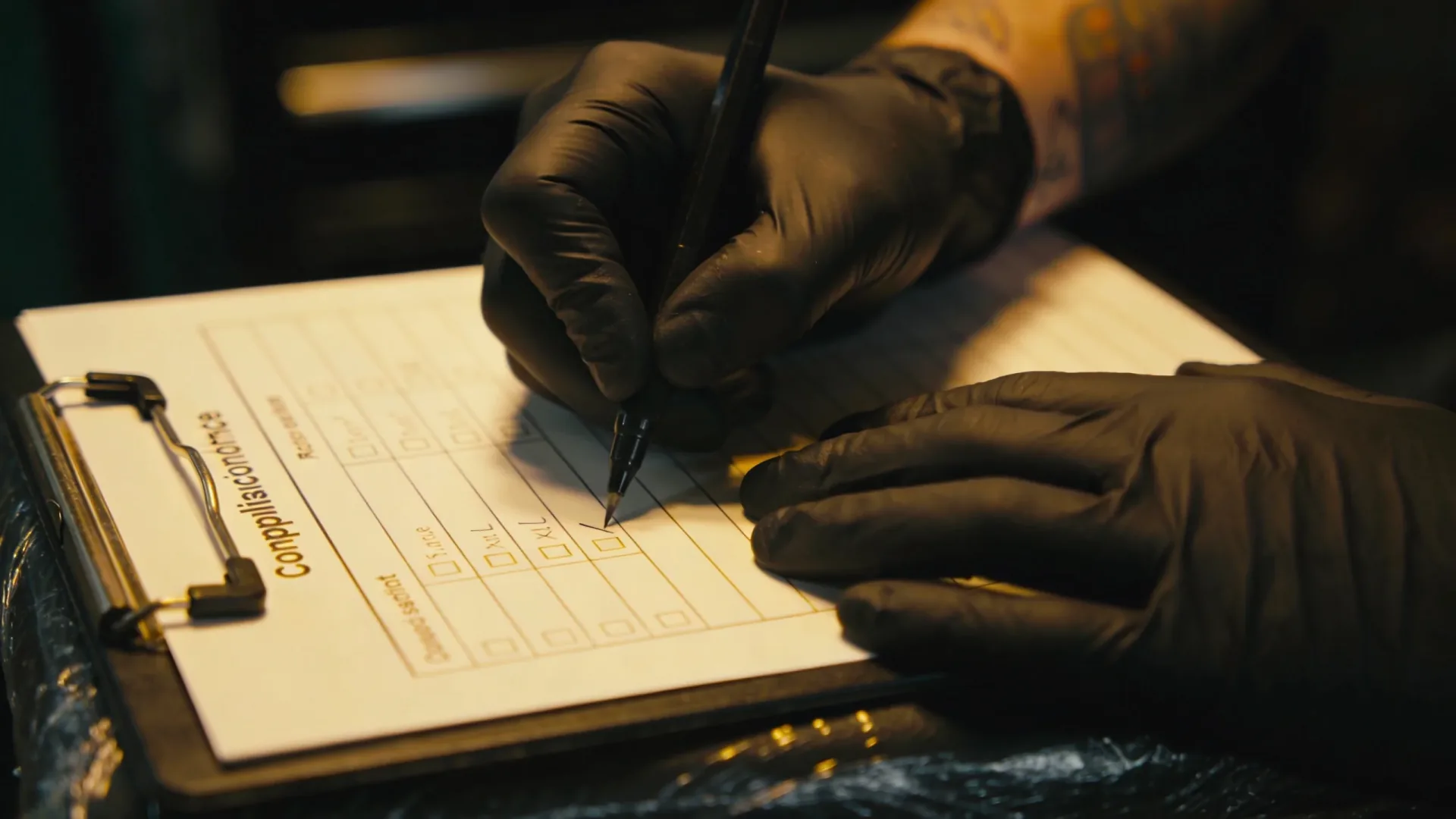
Audit Trail Features in Tattoo Studio Pro
Tattoo Studio Pro makes staying compliant a whole lot easier by offering features designed specifically for tattoo studios.
The platform automatically logs every studio action to meet legal compliance standards. With Staff Profiles, studio owners can assign roles and permissions, ensuring that access to sensitive information is both controlled and traceable. Add in security measures like PIN codes, and you’ve got a system that keeps everyone accountable.
Another standout feature is Digital Forms, which create searchable records for client intake and consent, something inspectors will definitely appreciate. All of this data is stored in centralized Client Profiles, so you have a secure, all-in-one location for records, notes, and client preferences. It’s everything you need to show that you’re managing data responsibly.
For finances, Tattoo Studio Pro has you covered. Every transaction is automatically tracked through the Payments feature, creating a clear, detailed record for audits. The Reports section makes financial reconciliation at the end of the day a breeze, with transaction histories that include timestamps and amounts. This level of detail helps you stay on top of financial record-keeping requirements.
These automated tools keep your studio compliant and make everyday management a whole lot smoother.
Benefits for Studio Owners
For studio owners, Tattoo Studio Pro takes the headache out of recordkeeping. Its searchable activity logs mean you can ditch the filing cabinets and stop worrying about misplaced paperwork. Even on shared devices, the User Switching feature ensures every action is tied to the right person, so there’s no confusion about who did what.
Centralizing everything, consent forms, client histories, and financial transactions, makes it easy to retrieve records during inspections. This simplifies audits and helps reduce stress, letting you focus on running your studio instead of drowning in admin work.
Training Staff to Use Audit Trail Systems
Getting your team up to speed with your audit trail system is key to making it work effectively and ensuring compliance.
Teaching Accurate Data Entry
Accurate data entry is the backbone of a reliable audit trail. Every action logged in the system must be correct because these records may be scrutinized during health inspections or tax audits. It’s important to stress to your team that errors can complicate records and even jeopardize compliance.
Show your staff exactly what information needs to be logged and why it matters. For instance, when entering client consent forms or appointment details, emphasize that missing timestamps or incomplete fields can raise concerns during an inspection. Since each entry is tied to a unique user ID, accountability is built into the system. As noted in the Newsletter on HIPAA logging requirements:
“Audit logs are records of events based on applications, user, and systems. Audit trails involve audit logs of applications, users, and systems. Audit trails’ main purpose is to maintain a record of system activity by application process and by user activity.”
Schedule regular reviews to catch mistakes early. Go over sample entries with your team to highlight common errors and demonstrate what good data entry looks like. The more familiar they are with the process, the easier it will be to maintain a consistent, trustworthy audit trail.
Beyond entering accurate data, managing system access with role-based permissions adds another layer of security and compliance.
Implementing Role-Based Permissions
Role-based permissions are a smart way to enhance security while helping staff focus on their specific responsibilities. By limiting access to only the information relevant to each role, you create clear boundaries for accountability and privacy.
For example, in Tattoo Studio Pro, you can assign roles like Manager, Artist, Staff, or even a Health Official for inspections. Each role comes with predefined access levels: artists can manage their portfolios, client profiles, and appointments, while front-desk staff may only need access to the queue and scheduling. Train your team on their specific permissions to protect client data and meet compliance requirements.
Regulations like HIPAA’s “minimum necessary” standard require staff to access only the information they need to perform their job. Explain to your team why this standard is crucial. Audit logs track normal access patterns, making it easier to spot unauthorized activity. When team members understand that their actions are logged and tied to their user ID, it builds a culture of accountability that strengthens your compliance efforts.
Why Audit Trails Are Worth It
Here we covered the common compliance hurdles faced by tattoo studios and how audit trails can effectively address them. These trails are more than just a formality, they’re a key tool for meeting legal requirements and shielding your business from potential compliance risks. By maintaining a detailed, verifiable record of every action, whether it’s client consent forms or sterilization logs, audit trails serve as proof of adherence to health and safety regulations while also ensuring accurate financial documentation.
Good recordkeeping can mean the difference between a smooth inspection and hefty fines. Audit trails provide a clear log of who accessed information, when it was accessed, and what changes were made. This level of transparency is essential for meeting OSHA‘s Bloodborne Pathogens standards as well as state licensing requirements, solidifying your studio’s compliance framework.
Automated systems take this a step further by simplifying the entire process. Tools like Tattoo Studio Pro make it easy to generate and maintain audit trails. With features like secure cloud storage and role-based access controls, every action, from client appointments to financial transactions, is logged, encrypted, and accessible only to authorized personnel.
Keeping these logs for at least six years ensures your records are ready for inspections or audits, supporting long-term compliance. A well-implemented audit trail system protects your studio, staff, and clients while making staying compliant a much more manageable task.
FAQs
How can audit trails help tattoo studios stay compliant with legal regulations?
Audit trails are essential for tattoo studios looking to stay in line with legal requirements. They automatically log details like who accessed or updated sensitive client records, the exact time of those actions, and what changes were made. This creates a system of accountability and provides a transparent record of role-based access, key for adhering to HIPAA guidelines and state health safety laws.
By keeping a dependable log of data handling, audit trails allow studios to spot unauthorized actions quickly. This protects client information and helps studios steer clear of hefty compliance fines while maintaining their clients’ trust.
How do audit trails enhance recordkeeping and compliance in tattoo studios?
Audit trails take recordkeeping to the next level by automatically capturing a comprehensive, unchangeable log of every action performed within the studio’s systems. From user IDs and timestamps to details of actions like creating, editing, or deleting records, everything is documented. These logs are searchable and easy to review, promoting both transparency and accountability.
On top of that, audit trails help tattoo studios stay compliant with regulations by offering a dependable way to monitor unauthorized activity and ensure proper record retention. This protects sensitive client and business data and aligns with legal and regulatory obligations, offering studio owners a sense of security.
Why is role-based access essential for compliance in tattoo studios?
Role-based access ensures that sensitive client and health information is only accessible to the right team members. This approach protects privacy and helps maintain secure and accurate audit trails, which are essential for meeting legal standards.
Limiting access to critical data reduces potential risks, keeps tattoo studios compliant with regulations, and strengthens client trust.